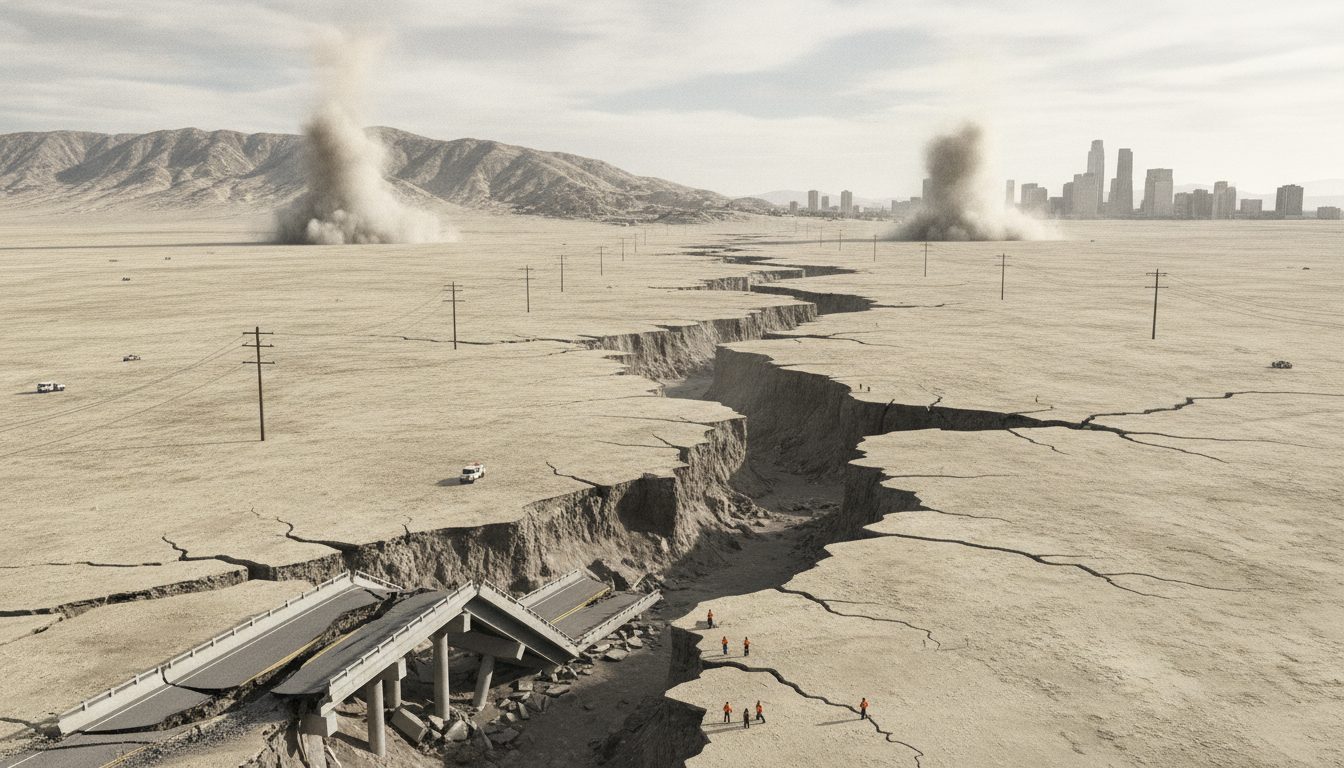
Two earthquakes struck the country in quick succession this week, shaking cities and rural towns and prompting a national emergency response. Early assessments suggest the quakes were linked along a major fault that crosses the country. Officials urged caution as teams checked buildings, roads, and utilities for hidden damage.
Rescue crews rushed to affected areas as aftershocks continued. Schools and offices closed in parts of the country while engineers inspected high-risk structures. The timing and pattern of the shaking pointed to a connected sequence rather than a single isolated event.
What Happened and Where
Residents reported strong shaking minutes apart in several regions. The events were close enough in time that many people were still outside from the first shock when the second one hit. Emergency services focused on older buildings and densely built districts where risk is higher.
Transport officials checked bridges and tunnels as a precaution. Power companies worked to restore service where automatic shutdowns triggered safety systems. Hospitals reviewed surge plans in case of delayed injuries.
Why the Quakes Came Back-to-Back
Seismologists said the second quake was likely triggered by the first. Stress can move along a fault, loading nearby sections until they break. That process can happen within minutes, days, or even longer.
The country was hit hard by a pair of quakes that happened in quick succession and were likely driven by stress being transferred from one part of the fault that runs through the country to another.
Experts cautioned that aftershocks remain likely. Most aftershocks are smaller than the main shocks, but they can still damage weakened structures. People were advised to stay clear of cracked walls, leaning chimneys, and loose rock slopes.
Impact on People and Infrastructure
Families slept outdoors or in community centers in the hardest hit zones. Local authorities set up water points and distributed blankets where needed. Road closures slowed travel to mountain towns, delaying damage assessments.
Engineers noted that repeated shaking can push buildings past a tipping point. A structure that rides out a first quake can be compromised by the second. This is especially true for unreinforced masonry and older concrete frames.
- Inspect buildings before reentry, even if they look intact.
- Avoid using elevators until cleared by officials.
- Keep emergency kits accessible due to possible aftershocks.
How Officials Are Responding
Authorities activated national and regional response plans. Search-and-rescue teams deployed with dogs, sensors, and drones to scan damaged blocks and landslide areas. Structural engineers began rapid safety tagging of public buildings.
Utility crews prioritized water and power restoration for hospitals and shelters. The education ministry coordinated with local districts to assess schools, aiming to reopen only after safety checks. Insurance regulators asked carriers to set up mobile claim centers near affected areas.
What Scientists Are Watching Next
Monitoring networks are tracking aftershocks to map the fault sections that slipped. That data can reveal whether the quakes unzipped a long stretch or jumped across gaps. The pattern will shape aftershock forecasts.
Geologists also plan field surveys to look for ground cracks, uplift, and landslides. These clues help refine hazard maps and building codes. While scientists cannot predict the exact time of the next quake, they can update probabilities for the coming days and weeks.
Residents will hear more from officials as the picture sharpens. If aftershocks cluster near critical infrastructure, targeted closures may follow until inspections finish.
For now, the country is focused on recovery and readiness. The twin shocks are a reminder that life along an active fault demands constant care in construction and planning. Clear communication, steady inspections, and prepared communities will shape how well the nation weathers the days ahead.

Rashan is a seasoned technology journalist and visionary leader serving as the Editor-in-Chief of DevX.com, a leading online publication focused on software development, programming languages, and emerging technologies. With his deep expertise in the tech industry and her passion for empowering developers, Rashan has transformed DevX.com into a vibrant hub of knowledge and innovation. Reach out to Rashan at [email protected]