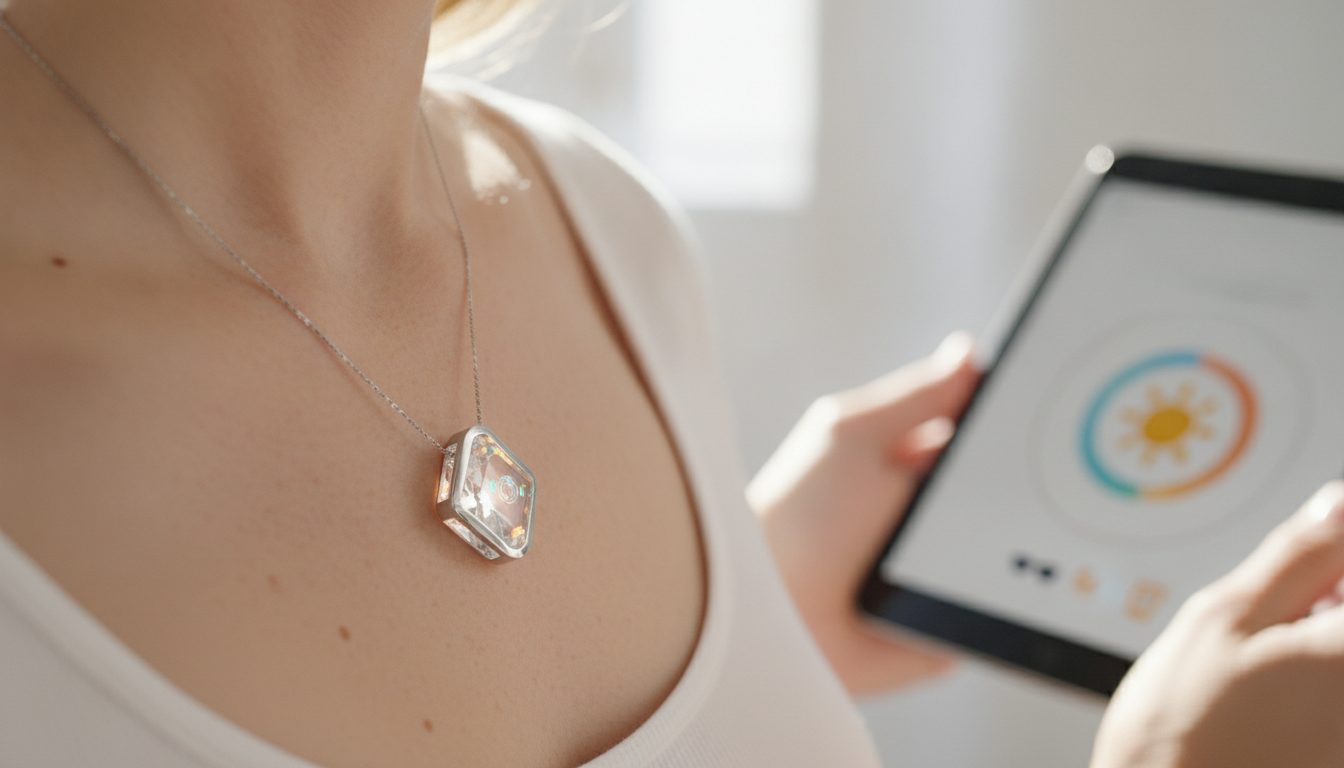
A new necklace-style device called The90 Gem promises to turn daily sun exposure into personalized guidance, aiming to close the gap between generic UV data and real skin risk. The startup’s pitch speaks to anyone who checks a weather app and still guesses whether to reapply sunscreen. The device links to an app that translates ultraviolet exposure into practical steps for skincare.
The push for personalization comes as dermatologists urge daily sun protection to cut risk from ultraviolet radiation. Skin cancer remains the most common cancer in the United States, and experts say risk rises with cumulative exposure. Many people rely on a citywide UV index that can miss differences in shade, altitude, or reflective surfaces. The90 Gem targets that gap by tracking exposure on the body and tailoring advice.
From Generic UV Index to Personal Signals
Consumers often see a simple number on a UV index and guess from there. But that number can be misleading on a late afternoon run or a cloudy day on water. The90 Gem attempts to measure what the wearer actually encounters and then convert that into prompts in an app.
“It’s a sleek, necklace-style tracker that transforms invisible sun exposure into actionable, app-based skincare guidance.”
Company materials frame the device as a bridge between science and daily habits. The app’s advice is meant to fit into routines, not add complexity. If it works as described, the tracker could help people apply sunscreen at better times and avoid overexposure that often goes unnoticed.
Why Personalization Matters for Skin Health
Ultraviolet radiation can damage skin even on cool or cloudy days. Reflection from sand, snow, or water can raise exposure. People with lighter skin often burn faster, but darker skin can also suffer long-term damage and delayed detection of problems. A personal tracker worn at chest level may capture exposure that a phone forecast misses in shade or when clothing shifts.
Health agencies advise broad-spectrum sunscreen, protective clothing, and seeking shade. Real-time cues could make those steps easier to follow. Personal data may also help users see patterns, like high exposure during errands or commutes.
How It Fits Into a Crowded Wearables Market
Wearables now track sleep, heart rate, and stress. Sun exposure tracking has lagged, in part because UV is hard to sense accurately on the go. The90 Gem arrives as consumers show interest in preventative health tools that do more than count steps. Its necklace form factor signals a style-forward approach that could widen appeal beyond athletes or early adopters.
- Necklace design aims for daily wear.
- App converts exposure into practical steps.
- Targets gaps left by broad UV indexes.
Competing products have tried clip-on sensors or smartwatch integrations. A dedicated device may offer clearer focus, but it must prove accuracy, comfort, and battery life to gain trust.
Promise and Practical Limits
Personal UV tracking can support better habits. Still, experts warn that sensors are not a substitute for sunscreen, regular reapplication, and checkups. Skin tone, medications, and altitude all affect risk. The device’s guidance will matter only if users act on it and maintain consistent wear.
Privacy will also draw attention. Any health-adjacent wearable must explain what data it collects and how it uses it. Clear settings, local processing where possible, and transparent policies will be key for adoption.
What To Watch Next
Independent validation will shape reception. Buyers will look for third-party tests of UV sensing, app advice, and alerts. Clear explanations of how the device estimates risk by time, intensity, and cumulative dose will help users trust recommendations.
If The90 Gem proves reliable, it could push sunscreen from an afterthought to a data-backed habit. That shift would be a win for skin health, especially during months when people underestimate exposure.
The launch signals a move to make sun care more precise and timely. The next step is real-world testing to see whether daily behavior changes follow. If users wear it often and find the prompts helpful, the device could turn a vague forecast into a meaningful, personal signal.

A seasoned technology executive with a proven record of developing and executing innovative strategies to scale high-growth SaaS platforms and enterprise solutions. As a hands-on CTO and systems architect, he combines technical excellence with visionary leadership to drive organizational success.