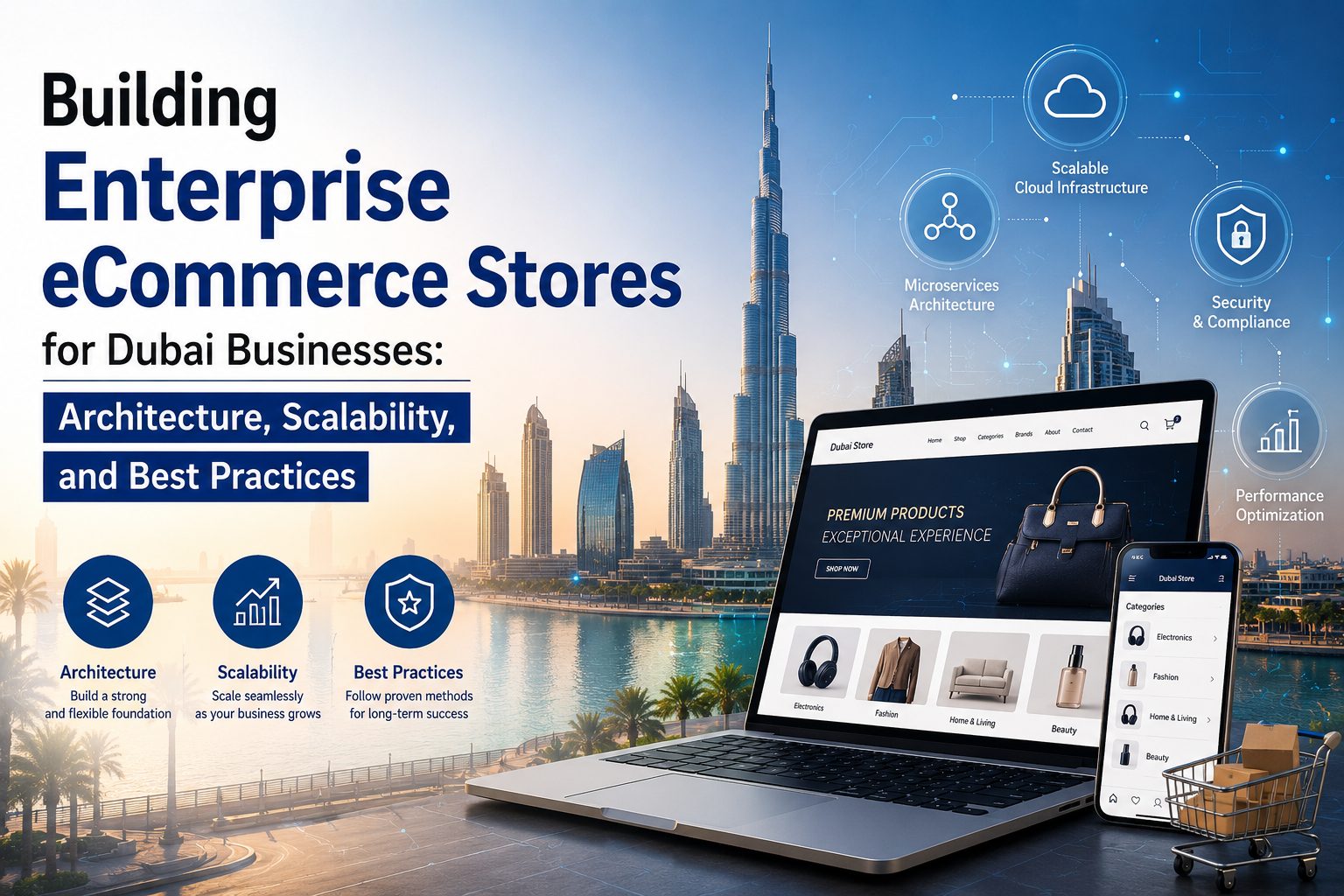
Dubai’s digital commerce market is one of the fastest-growing markets in the world. In an era defined by technology, a high percentage of the population with internet access, government efforts into digital transformation, and the rising expectations of consumers, companies are no longer able to maintain a simple online storefront. Businesses with high traffic, complex catalogs, multiple customer segments, and integrations with business-critical systems need eCommerce platforms capable of meeting their requirements.
From a retailer looking to expand his business across the UAE to an existing business upgrading their systems, planning is essential to build an enterprise eCommerce store. From the choice of the technology stack to the scalability, security, and overall flexibility of the solution, each architectural decision matters when it comes to business performance.
Let’s delve into the key elements of enterprise eCommerce architecture, the significance of Adobe Commerce and Magento’s standing in the market, and the best practices Dubai businesses should adopt for their online stores to stay future-ready.
Why Enterprise eCommerce Requires a Strong Foundation
Unlike a standard online store, enterprise ecommerce website development in Dubai is designed to support hundreds, if not thousands, of users, extensive product catalogs, multiple warehouses, regional pricing, personalized customer experiences, and seamless integrations with ERP, CRM, payment gateways, and logistics providers.
For businesses operating in Dubai, additional considerations include:
- Supporting multiple languages, including Arabic and English.
- Handling multiple currencies for regional and international customers.
- Integrating with local payment providers and shipping partners.
- Delivering consistent shopping experiences across web and mobile.
- Maintaining high performance during seasonal sales such as Ramadan, Dubai Shopping Festival, and White Friday.
A scalable architecture ensures that business growth does not result in declining website performance or operational inefficiencies.
Choosing the Right Enterprise Platform
Selecting the right platform is one of the most important technical decisions in any eCommerce project.
Adobe Commerce
Adobe Commerce was created specifically for medium and large businesses that need more commerce functionality than is offered by online sales. It comes with a number of features, including:
- Advanced catalog management
- AI-powered product recommendations
- Customer segmentation
- B2B functionality
- Multi-store and multi-site management
- Business intelligence and analytics
- Extensive API support
- Cloud deployment options
Its versatility enables enterprises to tailor almost every element of a customer’s journey, all while ensuring enterprise-level security and scalability.
Magento Open Source
For those looking to offer greater development flexibility, yet retain control over infrastructure and customizations, Magento Open Source is a great choice.
Its strengths include:
- Highly customizable architecture
- Large global developer community
- Modular development approach
- Thousands of extensions
- Cost-effective implementation for growing businesses
When advanced enterprise features are required, Magento Open Source can be a springboard to Adobe Commerce as businesses grow.
Designing a Scalable eCommerce Architecture
The key to building a successful enterprise platform is scalability, not requirements.
There are a number of architectural features that can lead to longevity.
Modular Development
Modular development allows businesses to add new features to their platforms without disturbing the rest of the platform. This makes it easier to maintain and to make upgrades in the future.
API-First Integration
Modern commerce platforms rarely operate in isolation.
API-driven architecture enables seamless communication with:
- ERP systems
- CRM platforms
- Inventory management software
- Marketing automation tools
- Payment gateways
- Shipping providers
- Customer support platforms
This ensures data consistency across the organization while reducing manual processes.
Cloud Infrastructure
Cloud hosting offers flexibility that traditional hosting environments often cannot match.
Benefits include:
- Automatic scaling
- Higher availability
- Faster disaster recovery
- Improved security
- Better performance monitoring
Businesses experiencing unpredictable traffic spikes particularly benefit from cloud-native deployments.
Performance Best Practices
Website speed directly influences customer satisfaction, search visibility, and conversion rates.
Key optimization techniques include:
Full-Page Caching
Caching frequently accessed pages significantly reduces server response time while improving the shopping experience during peak traffic periods.
Content Delivery Network (CDN)
A CDN distributes website assets across multiple global servers, reducing latency for customers regardless of their location.
Image Optimisation
High-quality product imagery is essential, but oversized images negatively affect performance. Modern image formats, lazy loading, and responsive image delivery improve loading speed without sacrificing visual quality.
Database Optimisation
Enterprise stores generate large volumes of transactional data. Regular database maintenance, indexing, and query optimization help maintain consistent performance.
Code Quality
Clean, maintainable code improves both performance and long-term scalability. Following Magento development standards reduces technical debt and simplifies future upgrades.
Security Should Never Be an Afterthought
Cybersecurity has become a board-level concern for enterprise organizations.
Businesses handling customer information and online payments must implement comprehensive security measures.
Best practices include:
- Multi-factor authentication
- Role-based user permissions
- Regular software updates
- Secure API authentication
- Web Application Firewall (WAF)
- SSL encryption
- Continuous vulnerability assessments
- Automated backups and disaster recovery planning
Security should be integrated into every stage of development rather than added after deployment.
Building for Future Growth
Enterprise eCommerce is continuously evolving.
Businesses should adopt technologies that allow future innovation without requiring complete platform rebuilds.
Important trends include:
Headless Commerce
Separating the frontend from the backend allows businesses to deliver consistent shopping experiences across websites, mobile applications, kiosks, and emerging digital channels while enabling faster frontend innovation.
AI-Driven Personalization
Artificial intelligence is increasingly used to personalize product recommendations, optimize search results, automate merchandising, and improve customer engagement.
Omnichannel Commerce
Customers expect seamless experiences whether they interact online, through mobile applications, or in physical retail locations. Unified commerce architecture enables consistent inventory, pricing, and customer data across all touchpoints.
Data-Driven Decision Making
Real-time analytics help organizations monitor customer behavior, optimize conversion funnels, forecast inventory requirements, and improve marketing performance.
Best Practices for Dubai Businesses
Building an enterprise eCommerce store for Dubai requires balancing technical excellence with local market expectations.
Businesses should focus on:
- Designing bilingual customer experiences.
- Supporting regional payment methods alongside international options.
- Ensuring mobile-first performance.
- Planning scalable infrastructure before rapid business growth.
- Integrating ERP and CRM platforms from the beginning.
- Optimizing page speed for better customer experience and search visibility.
- Prioritizing cybersecurity and regulatory compliance.
- Selecting a platform capable of supporting future AI and omnichannel initiatives.
These practices help organizations deliver reliable, scalable digital commerce experiences while remaining competitive in one of the region’s fastest-growing online markets.
Choosing the Right Development Partner
There are things other than technology that make projects successful. Implementing it, making architectural choices, and having the know-how to develop it are equally significant.
Relying on an experienced Adobe Commerce and Magento development partner will ensure that businesses create a platform that is in line with their goals for the future, and not another internet-based storefront. Whether we’re talking about solution architecture and custom development, integration, performance optimization, and support, an experienced team can minimize the risk of implementation and speed up the time to market.
Conclusion
The concept of enterprise eCommerce is not limited to eCommerce for selling products online. It’s about developing an ecosystem that’s digital, scalable, and can support the growth of the business, its efficiency, and its changing customer needs.
A well-built Adobe Commerce or Magento solution offers Dubai businesses the flexibility to meet market demands as they evolve and ensures top-notch performance and security. Through modern architectural principles, API-first integrations, cloud architectures, and continuous optimization, organizations can establish digital commerce platforms that stay competitive over the years.
The UAE’s digital economy will continue to grow, and businesses making decisions about scalable architecture now will be better equipped to provide customers with better experiences and drive long-term sustainable growth.

Marcus Whitfield writes about developer tools, programming languages, and the software trends shaping how engineers build. Before joining DevX, he spent five years as a full-stack developer and two more running a small dev-tools newsletter that topped 10,000 subscribers.