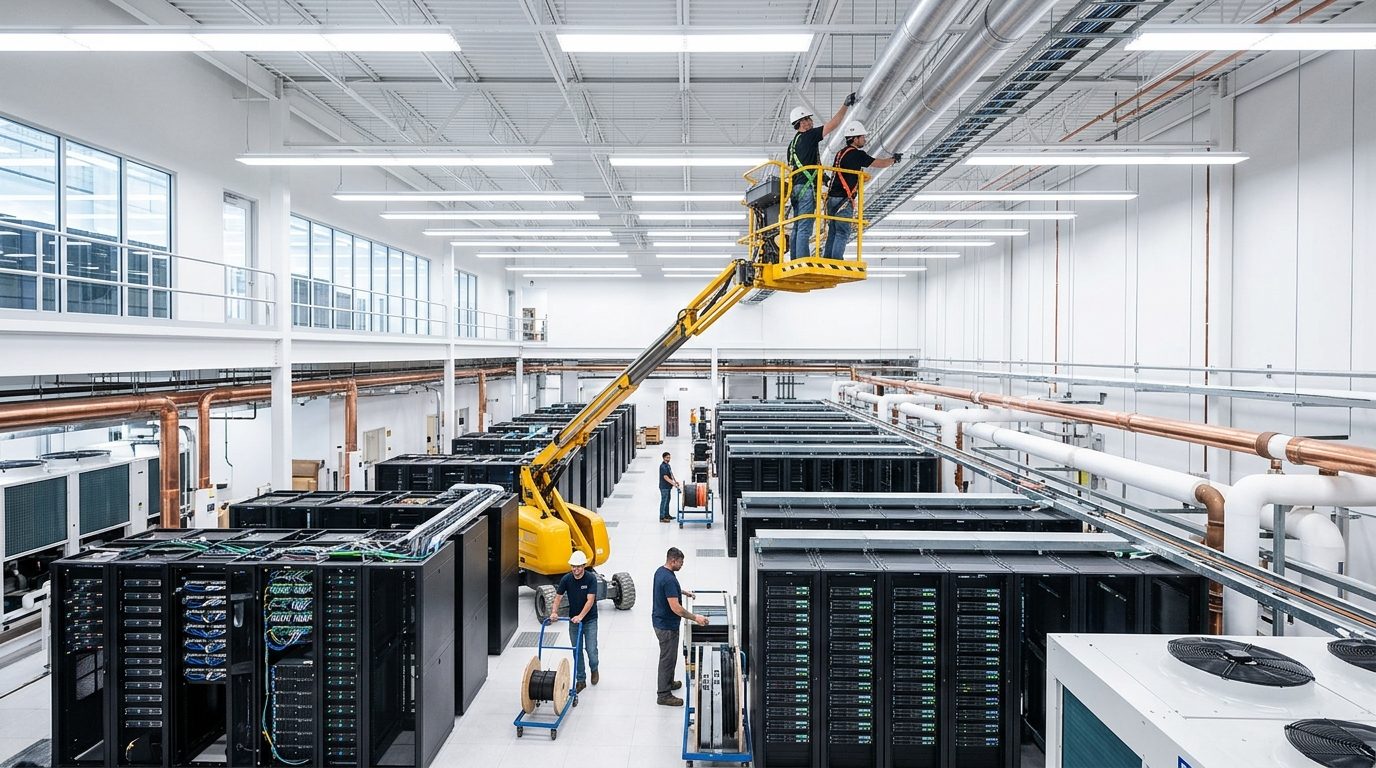
Nvidia may dominate headlines about artificial intelligence, but power and cooling suppliers are also gaining from the global data centre building rush.
Developers are expanding facilities as AI systems increase demand for electricity, heat control and computing capacity. The spending is shifting investor attention to companies that support data centres but do not produce advanced chips.
The trend reflects a central challenge facing the technology sector. New processors can be installed only when sites have enough power, cooling equipment and grid connections. Developers are therefore racing to avoid what industry observers describe as “infrastructure bottlenecks.”
AI Growth Tests Physical Infrastructure
Nvidia has become closely linked with the AI boom because its graphics processors train and operate many popular systems. Yet those processors depend on a much larger physical network.
Data centres need equipment that receives electricity from the grid, changes its voltage and distributes it safely. Backup systems must keep servers running during outages. Cooling units must remove the heat created by dense groups of processors.
AI computing can place greater demands on these systems than many traditional online services. That changes how operators plan new buildings and upgrade older sites.
The main areas receiving attention include:
- Electrical distribution and power management equipment
- Backup batteries and emergency generators
- Air and liquid cooling systems
- Grid connections and on-site energy infrastructure
These requirements mean chip purchases are only one part of AI investment. Spending must also reach the industrial suppliers that make large computing sites usable.
Suppliers Gain From Construction Rush
The global construction drive offers a new source of demand for makers of power and temperature-control equipment. Some of these companies have received less public attention than chip designers or cloud computing groups.
Their role, however, is becoming harder to overlook. A delay in electrical gear or cooling installation can prevent an otherwise completed facility from operating at full capacity.
This gives suppliers an important position in project schedules. It may also support stronger orders as developers reserve equipment early to reduce the risk of delays.
The benefits may extend across several types of businesses. Large industrial manufacturers can provide major electrical systems, while specialist firms may supply cooling units, controls or maintenance services.
Power Access Remains a Key Constraint
Equipment orders alone cannot solve every problem. Data centres also require reliable access to local electricity networks, which may take years to expand.
New facilities can face long waits for grid connections. Local authorities may also examine their effects on electricity prices, water use, land and nearby communities.
Cooling creates another concern. Some systems consume substantial water, while alternatives may require more energy or higher initial spending. Operators must weigh performance against cost and local resource limits.
These pressures could influence where developers build. Regions with available power, clear planning rules and suitable climate conditions may attract more projects. Areas with strained grids could lose investment or require costly upgrades.
Risks Temper the Growth Outlook
The construction surge does not guarantee equal gains for every supplier. Data centre projects are expensive, and changes in AI demand could lead developers to delay or redesign facilities.
Competition may also increase as manufacturers add production capacity. Supply shortages can support pricing for a time, but rapid expansion may later create excess inventory.
Investors must also distinguish between confirmed orders and expected demand. Companies tied closely to a few large customers may face added risk if project schedules change.
Still, the shift in attention from processors to physical infrastructure shows how widely AI spending is spreading. Nvidia remains central to the industry, but chips cannot operate without dependable power and heat management.
The next phase of the data centre race will depend on whether suppliers, utilities and developers can expand together. Grid access, equipment delivery times and cooling needs will be key signals to watch as construction continues.

A seasoned technology executive with a proven record of developing and executing innovative strategies to scale high-growth SaaS platforms and enterprise solutions. As a hands-on CTO and systems architect, he combines technical excellence with visionary leadership to drive organizational success.