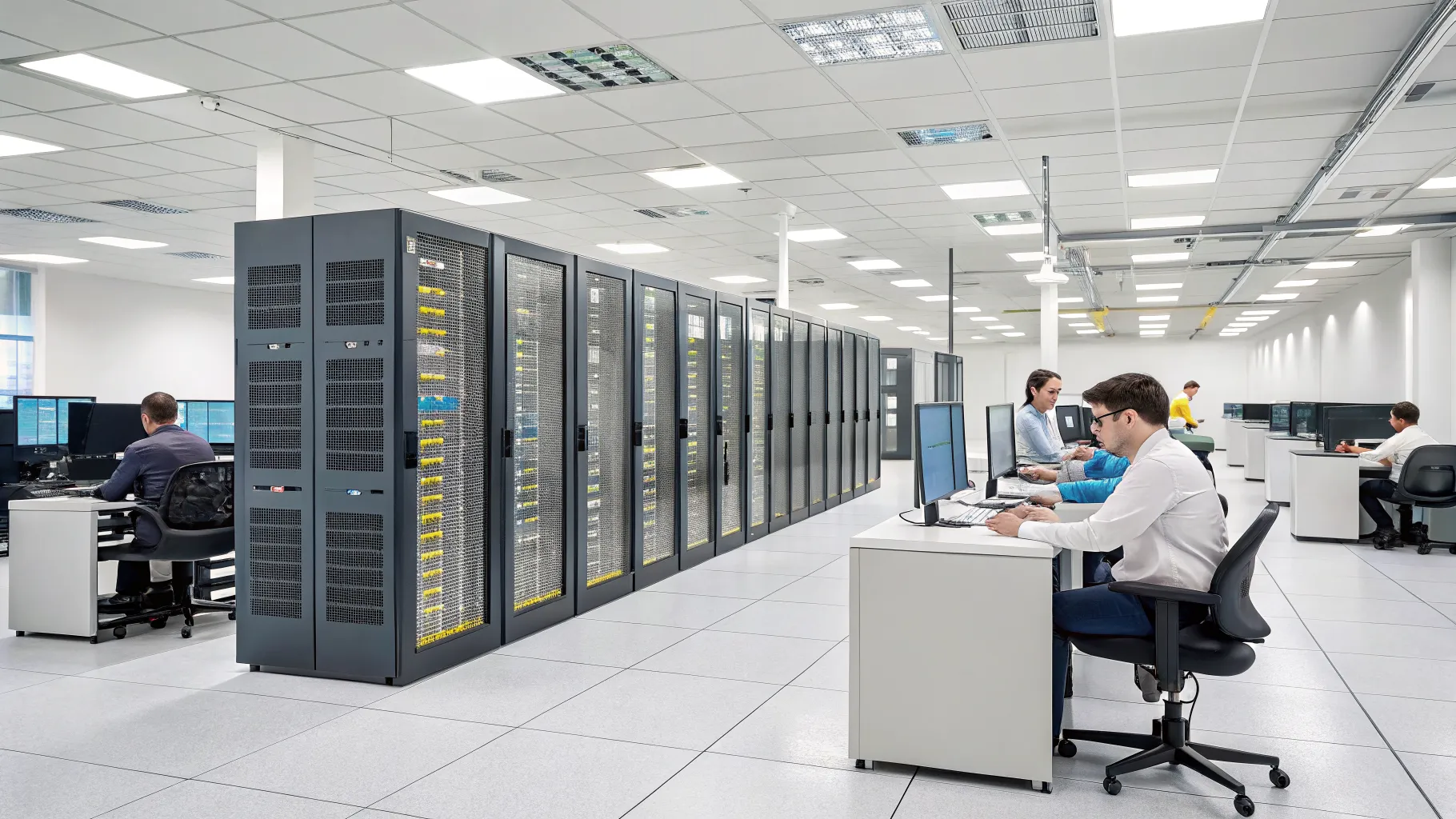
As artificial intelligence draws record investment from the world’s biggest technology companies, employee headcounts at those firms remain largely intact. The push, centered on data centers, specialized chips, and new software tools, has not translated into sweeping job cuts, even as executives promote automation and efficiency gains.
The central tension is clear: companies are moving fast to build and deploy AI, but they are not dramatically smaller. Instead, they are reshaping roles, shifting budgets, and hiring selectively in high-skill areas while pausing or reducing growth elsewhere.
“Tech giants are investing heavily in artificial intelligence but haven’t significantly shrunk their workforces.”
Background: A Capital-Heavy Bet On AI
Over the past two years, major platforms have poured money into AI infrastructure. Spending has focused on cloud capacity, training clusters, and the talent needed to tune and maintain large models. This mirrors earlier investment cycles in mobile and cloud, when firms built costly foundations before wider commercial returns arrived.
Hiring has slowed from the high-growth years of the pandemic, but many top firms still report stable or modestly rising headcounts. Some went through targeted layoffs to streamline projects, yet total staff numbers often reflect reassignments and new hiring in areas like machine learning engineering, product safety, and compliance.
Why Jobs Haven’t Collapsed
Executives say AI is changing work rather than erasing it outright. Many teams now use AI to boost output, cut routine tasks, and speed testing cycles. That can raise productivity without immediate cuts. Companies also need people to build, integrate, and monitor AI systems, which creates demand in engineering, data operations, and security.
Non-technical roles are shifting too. Product managers, marketers, and support teams are learning new tools and updating workflows. Legal and policy staff are growing in importance as governments weigh rules on safety, privacy, and competition.
Winners, Losers, And The Middle
Not every role benefits. Some content and support functions face pressure from automation. Yet even in these areas, firms often keep staff to supervise tools, maintain quality, and handle complex cases. In software development, AI coding assistants change how engineers work, but companies still rely on senior developers to design systems, review outputs, and ensure reliability.
In the data center, new AI services require more site planners, network engineers, and reliability experts. Supply chain and procurement teams are busy securing chips, power, and cooling capacity. These needs offset cuts in lower-growth product lines.
What The Investment Signals
Heavy spending points to a long game. Building models, acquiring compute, and securing energy supplies take time. Companies are racing to lock in capacity and market share, betting that AI features will lift subscription revenue, ad performance, and cloud usage.
- Short term: higher costs, selective hiring, and efficiency pushes.
- Medium term: pressure to show revenue tied to AI features and services.
- Long term: potential headcount shifts as mature automation reshapes work.
Risks And Checks On Job Cuts
Two factors temper rapid downsizing. First is execution risk. AI systems can make errors, introduce bias, or fail in edge cases, so human oversight remains essential. Second is regulation. New and proposed rules on data use, transparency, and safety increase demand for compliance and audit skills, which limits immediate reductions.
Reputational risk also matters. Broad layoffs tied directly to AI could draw political and public scrutiny at a time when companies seek trust for new products. Many leaders appear to be favoring retraining and attrition over sweeping cuts.
What To Watch Next
The next several quarters will test whether AI features generate clear revenue and margin gains. If growth accelerates, firms may keep hiring in high-value roles while holding steady elsewhere. If returns lag, more aggressive restructuring could follow, focused on teams where automation proves reliable.
Key signals include disclosures on capital spending, commentary about productivity from AI tools, and the mix of hiring in infrastructure, safety, and applied research. Customer adoption of AI add-ons in cloud and enterprise software will also guide staffing decisions.
For now, the headline remains steady: unprecedented AI investment, stable headcounts. The story to watch is how quickly spending converts to measurable business gains—and whether that shifts the balance between human oversight and automated systems in the years ahead.

Deanna Ritchie is a managing editor at DevX. She has a degree in English Literature. She has written 2000+ articles on getting out of debt and mastering your finances. She has edited over 60,000 articles in her life. She has a passion for helping writers inspire others through their words. Deanna has also been an editor at Entrepreneur Magazine and ReadWrite.