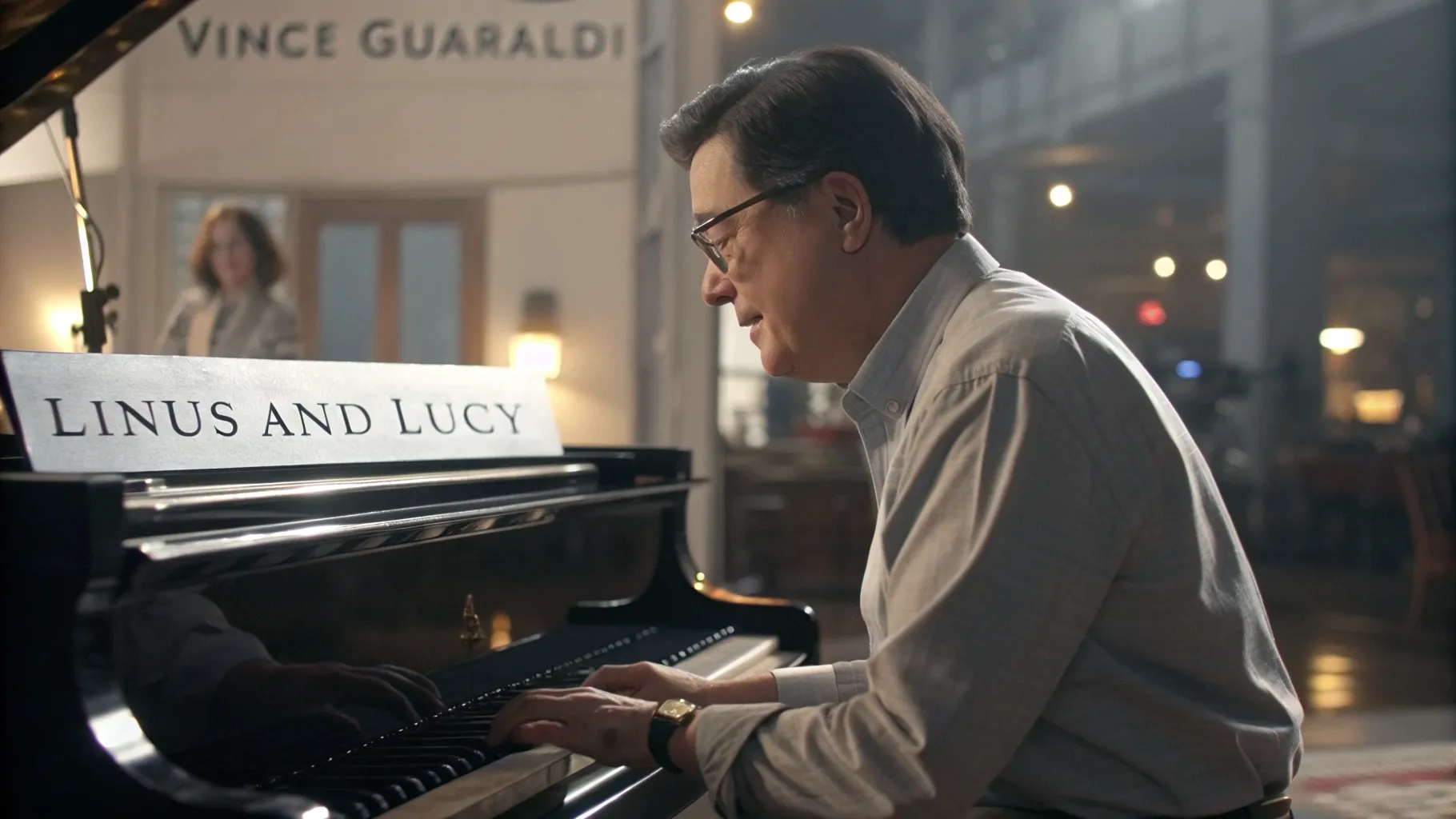
Stephen Colbert marked his final day as host with a quiet but pointed gesture that spoke louder than a monologue. On air, he sat at a piano and played “Linus and Lucy,” the Vince Guaraldi theme from Peanuts, in what appeared to be a last jab at the network. The moment, brief and wordless, offered viewers a coda to a tenure shaped by sharp humor, cultural savvy, and frequent negotiation with corporate priorities.
“On that last day of his hosting, Colbert played Linus and Lucy on air in final dig at the network.”
A Farewell Wrapped in a Familiar Melody
“Linus and Lucy” is a tune linked with childhood, wit, and gentle rebellion. It signals innocence and subtext. For Colbert, long known for meaning between the lines, the choice fit. It sounded like a sign-off and a side-eye at the same time.
Late-night hosts often load their endings with signals. Some offer sweeping tributes. Others pick a song that frames the night. Colbert’s choice felt small on the surface but pointed in intent. It did not name names. It did not need to.
Reading the Message
Colbert’s shows have often wrestled with how far satire can go on network television. A piano flourish can skirt legal and PR battles while still making a point. It is also hard to edit or spin a melody that many viewers know by heart.
Industry watchers say such gestures usually hint at creative disputes, scheduling fights, or editorial limits. A tune becomes a stand-in for what cannot be said outright. The audience, trained by years of coded jokes, fills in the rest.
Late-Night’s Long History of Tension
This is not new. Late-night anchors have long walked a line between personal voice and corporate control. Guests, writers, and musical choices often become proxies for power struggles that play out behind closed doors.
Public spats over time slots, budgets, and tone have flared before. Viewers remember eras when hosts aired grievances through comedy bits, monologues, or closing numbers. Song, in particular, serves as a safe outlet: it moves, it hints, it leaves space for inference.
Why a Piano Can Say More Than a Monologue
Music lands fast. It bypasses spin and debate. The Peanuts theme carries layers of cultural memory: wry humor, light defiance, and nostalgia. In a closing moment, it reads as both thank-you and critique.
- It is widely recognized and signals shared experience.
- It softens blunt criticism while keeping the edge.
- It travels well on clips and social media.
That last point matters. Late-night viewership has shifted from live broadcasts to next-day clips and posts. A simple performance can rack up views and frame the narrative without extra context.
Impact on the Show, the Network, and Viewers
For the show’s staff and loyal audience, the moment offered closure. It suggested that the host remained in control of the message at the end. For the network, it revived a familiar question: how much freedom should high-profile hosts have when business pressures run high?
Advertisers value predictability. Viewers reward authenticity. Late-night has to juggle both. A deft musical sign-off can satisfy the second without igniting a crisis with the first.
What to Watch Next
Attention will turn to who fills the chair and whether the format shifts. Will the next iteration chase viral sketches, lean into interviews, or rebuild the monologue for streaming audiences? The answer will guide budgets, bookings, and tone for months.
The final note suggests a parting view from the outgoing host: that wit and warmth still matter, even under pressure. A simple song, played without fanfare, left the message clear enough for anyone listening.
Colbert’s finale did not rage. It resonated. The soft power of a familiar melody may prove to be the last word on a complex relationship. Viewers will now watch for how the network responds in programming, tone, and who gets the next opening night.

Deanna Ritchie is a managing editor at DevX. She has a degree in English Literature. She has written 2000+ articles on getting out of debt and mastering your finances. She has edited over 60,000 articles in her life. She has a passion for helping writers inspire others through their words. Deanna has also been an editor at Entrepreneur Magazine and ReadWrite.