Enterprises are recasting agentic AI as a new system of work rather than a quick tool, reshaping plans for scale, safety, and return on investment. The shift, described by industry leaders in recent briefings this week, centers on governance, observability, and design choices that reduce lock-in. The aim is to turn pilots into measurable production impact while managing risk.
“Agentic AI is not a shortcut; it’s a new system of work. Enterprises that approach it with platform discipline aligning autonomy with risk, embedding governance and observability, and designing for swap‑ability will convert pilots into production impact.”
Why Agentic AI Is Different
Agentic AI systems can set goals, take actions, and coordinate tasks with other tools. That autonomy creates new value but also new failure modes. Traditional proof-of-concept work often misses those realities. As a result, many pilots stall when they meet compliance, security, or change-management hurdles.
Companies that treated earlier automation waves as programs, not point tools, saw steadier gains. The same logic now applies to agentic systems. Teams must define how much freedom an agent gets, what data it can touch, and how humans supervise outcomes.
From Pilots to Production
Leaders are turning pilot playbooks into platform playbooks. They standardize policies, tools, and processes so many teams can build on the same rails. That reduces duplicated effort and shortens audit cycles. It also clarifies who is accountable when agents act on their own.
A common pattern is a “risk tier” approach. Low-risk tasks, such as drafting summaries, get more autonomy. Medium- and high-risk tasks, such as data entry in core systems or vendor payments, require human checks and stronger controls.
Governance, Risk, and Observability
Governance starts with clear boundaries. Teams define permitted actions, data scopes, and escalation paths. They also write playbooks for failure, including instant shutdown and rollbacks. Policies alone are not enough without observability.
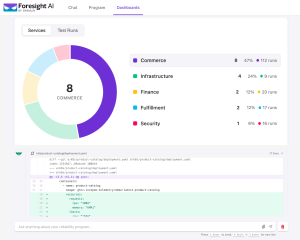
Observability for agentic AI means full event logs, prompt and tool call capture, and traceability from output back to inputs. Real-time dashboards can flag drift, prompt injection attempts, or unusual spending. Security reviews now include prompt security, model misuse, and third-party tool risks.
- Classify tasks by risk and map the right level of autonomy.
- Log every action and decision with time, context, and source.
- Build human-in-the-loop steps for medium and high-risk flows.
- Stand up “kill switches” and rollback plans.
- Run red-team tests for prompt attacks and tool abuse.
Designing for Swap-Ability
Design choices can prevent deep vendor lock-in. Abstraction layers separate business logic from model or tool providers. This “swap‑ability” lets teams change models as costs, performance, or policies shift. It also supports procurement leverage and continuity planning.
Technical patterns from modern software help here. Use standardized APIs for tools. Keep prompts and policies in version control. Containerize agent services. Maintain test suites that compare outputs across models. These steps make changes safer and faster.
Industry Impact and Open Questions
Sectors with heavy controls, such as finance and healthcare, are moving slower but building stronger guardrails. Firms with lighter compliance needs, such as marketing and support, are scaling faster but still face brand and data risks. Vendors are racing to add audit logs, enterprise permissions, and cost controls as table stakes.
Not everyone agrees on the pace. Some leaders argue that strict governance slows learning. Others warn that weak controls will cause incidents that trigger stricter rules later. The middle path is to expand autonomy as systems prove safe under monitoring.
What To Watch
Standards for AI observability and audit trails are forming across industry groups. Tool providers are adding portability features, such as prompt export, model-agnostic SDKs, and reproducible runs. Internal councils that include risk, compliance, and security are becoming a norm for enterprise AI approvals.
Success stories share a theme: treat agentic AI as a managed system, not a one-off script. Teams that set clear guardrails, measure outcomes, and design for swap‑ability are better placed to scale.
The takeaway is simple. Agentic AI can move the needle if it is built like a platform and governed like a core process. Companies that align autonomy with risk, add deep observability, and keep the option to switch models are more likely to turn experiments into lasting results. Watch for shared standards, stronger audit tooling, and clearer role definitions as the next wave in enterprise adoption.

A seasoned technology executive with a proven record of developing and executing innovative strategies to scale high-growth SaaS platforms and enterprise solutions. As a hands-on CTO and systems architect, he combines technical excellence with visionary leadership to drive organizational success.