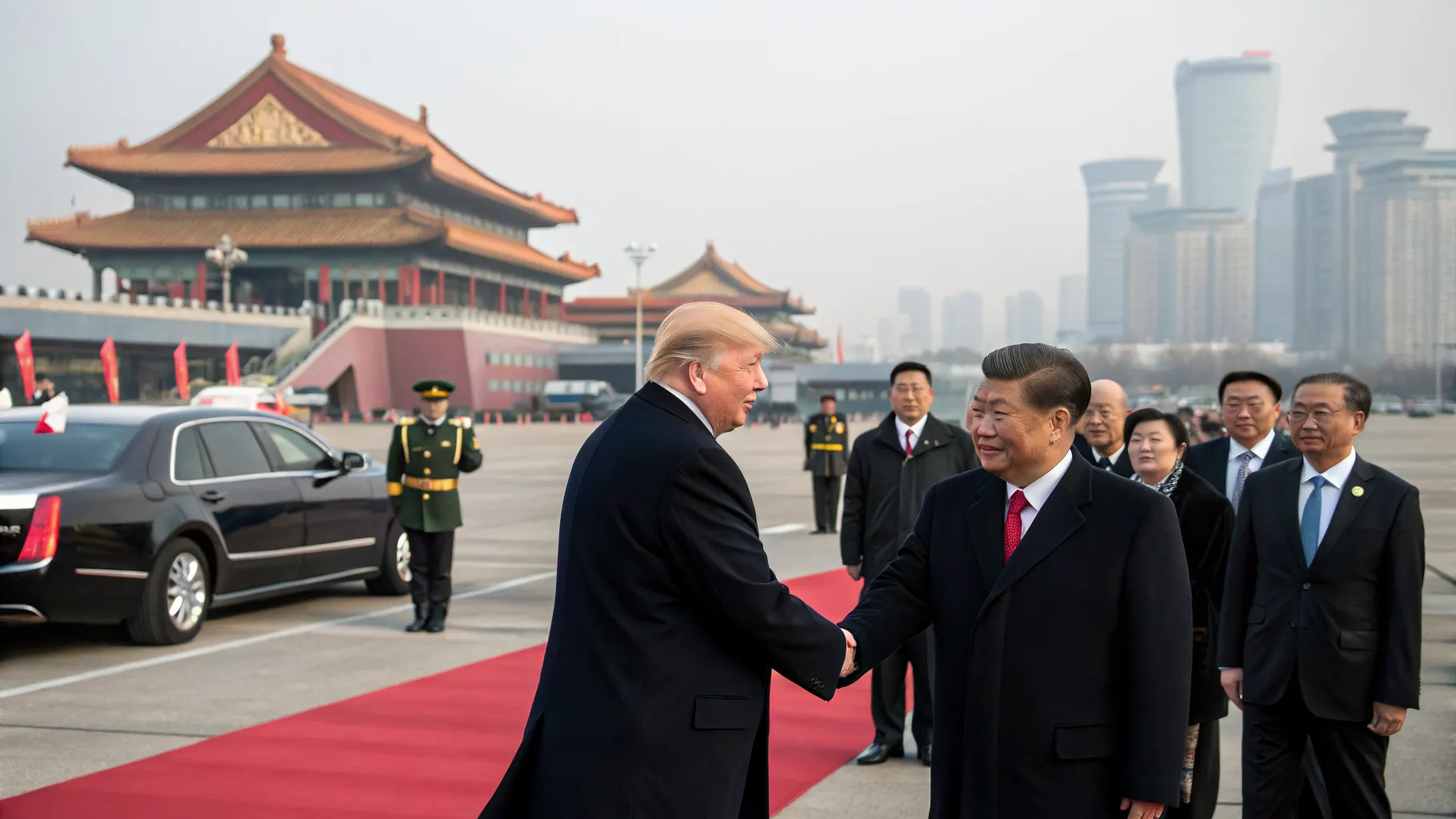
President Donald Trump arrived in Beijing for a high-stakes summit, saying he will urge China’s leader to open the country’s economy to American firms. The visit places trade and investment at the center of talks in China’s capital, with U.S. officials seeking clearer rules, fewer barriers, and fair treatment for companies trying to sell and operate in the world’s second-largest economy.
The push reflects years of pressure from U.S. businesses over limited access in key sectors and concerns about unequal treatment. NBC Nightly News anchor Tom Llamas reported on the president’s pledge during the trip, framing the moment as a key test of whether policy promises can translate into concrete gains.
The Message From Washington
He will push for China’s leader to “open up” China to American businesses.
Trump’s words signal a focus on market access rather than narrow concessions. U.S. officials and executives have long argued that restrictions in banking, autos, technology, and media make it hard to compete. They also cite rules that steer foreign companies into joint ventures and limit ownership, which can dilute control of strategy and data.
Supporters of a firm stance say clearer access would boost exports and investment. They also want strong enforcement to prevent backsliding once cameras leave the summit halls.
Why Access Matters
China’s economy remains a major source of growth for global companies. Yet many firms say they face opaque licensing, long waits for approvals, and sudden rule changes. Some industries still have caps on foreign ownership. Others face data rules that raise costs or keep key services out of reach.
For Washington, the issue links to the trade gap. The U.S. goods trade deficit with China was roughly $375 billion in 2017, according to U.S. data. Officials argue that more balanced access could help close that gap by letting American firms sell more into China’s market.
Beijing’s Calculus
Chinese leaders often defend gradual reform. They cite the need to protect financial stability, national security, and social priorities. They also point out areas where access has improved, such as pilot programs in finance and steps to lower tariffs in certain consumer goods.
Analysts in Beijing say any changes will likely move in phases. They expect officials to weigh domestic industry concerns and the risk of being seen as giving ground under pressure. As one trade expert in Beijing put it, reforms arrive “on China’s schedule, not anyone else’s.”
What Business Leaders Want
Industry groups are looking for more than public statements. They want measurable steps with dates and enforcement. Their wish list often includes:
- Higher foreign ownership caps in services and autos.
- Faster and transparent licensing and approvals.
- Clearer data and cybersecurity rules.
- Commitments against forced technology transfer.
Executives say even partial progress in these areas would unlock investment and jobs on both sides. Without it, they warn that supply chains and new projects may shift elsewhere.
Risks, Rewards, and the Road Ahead
The talks come after years of friction over tariffs, technology, and intellectual property. Past dialogues often produced pledges but few binding timelines. That history raises the stakes for this summit. Success would be a short list of reforms that can be verified within months, not years. Failure could harden views in Congress and spark new trade actions.
Tom Llamas noted the White House sees the visit as a chance to reset expectations. That means linking market-opening steps to near-term checkpoints. It also means showing benefits at home, where voters judge outcomes by jobs and earnings, not communiqués.
Some economists caution that even sweeping access will not erase the trade gap overnight. Consumer demand, exchange rates, and global supply chains also shape the numbers. But fairer rules could lift exports, expand services trade, and reduce long-standing friction.
Signals to Watch
Observers will track whether China issues written guidance on ownership caps or approvals. They will look for pilot projects that can scale nationwide. They will also study enforcement language to see if there are penalties for missed targets.
For U.S. companies, the early read will show up in licenses granted, stake increases in joint ventures, and new product approvals. For Beijing, the test will be balancing reform with stability while keeping domestic firms competitive.
Trump’s push to “open up” China to American businesses sets a clear marker. The next few months will reveal whether summit diplomacy turns into real changes on the ground. If it does, both sides could claim a tangible win. If it does not, calls for tougher measures are likely to grow louder.

Kirstie a technology news reporter at DevX. She reports on emerging technologies and startups waiting to skyrocket.