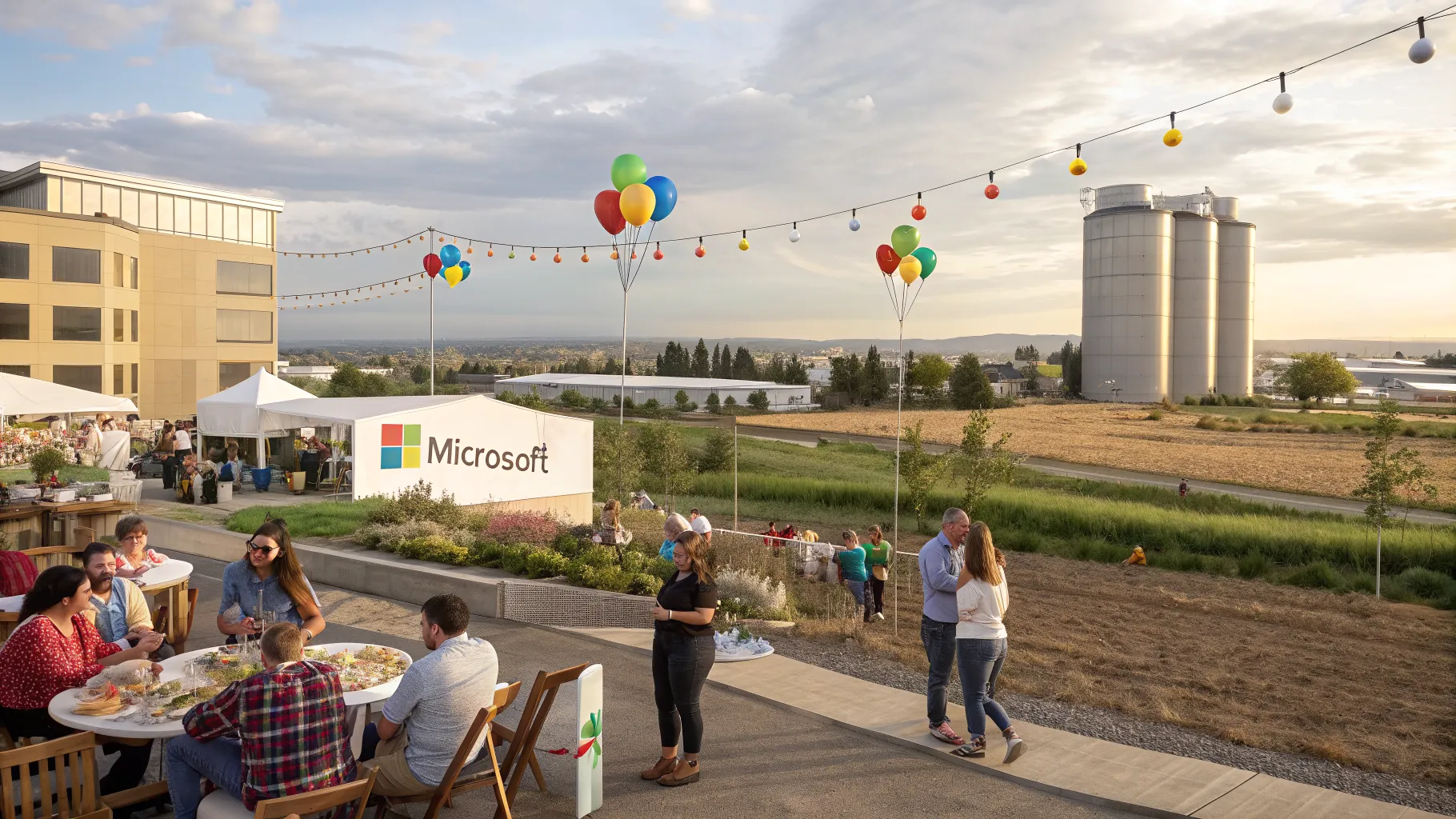
Microsoft marked a hometown milestone in Central Washington, hosting a community party in Quincy on Thursday to celebrate the 20th anniversary of its first data center there. The gathering highlighted how a small agricultural city became a strategic node in cloud computing, and raised fresh attention to jobs, infrastructure, and resource use tied to large-scale digital growth.
Microsoft hosted a community party in Quincy, Wash., on Thursday celebrating the opening of its first data center there 20 years ago.
The celebration came as data centers expand to support artificial intelligence and cloud services. Quincy’s location, access to regional power, and available land have drawn long-term investment. The anniversary offered a public look at how the industry’s footprint has reshaped the area and what the next chapter may bring.
Two Decades of Local Change
When the first facility opened, Quincy was better known for apples, potatoes, and food processing. Over time, information infrastructure joined agriculture as a core part of the local economy. New buildings rose on the city’s edge, and more technology workers and contractors arrived for construction, operations, and maintenance.
Supporters point to a steadier tax base and year-round contracts for trades. They also note donations to schools and civic programs, along with improvements to roads and utilities connected to industrial growth. For many residents, the anniversary underscored that these facilities are no longer new—they are part of daily life.
Others see rising pressure on housing and traffic during construction cycles, and worry about noise and light around industrial sites. Some remain cautious about long-term reliance on a single sector. Their questions focus on how to balance sustained growth and community goals in education, health, and public safety.
Energy and Water Come Into Focus
Power and water use are central to the public debate. Cooling servers requires careful management of water and energy, and peak electricity demand can strain local grids without planning. Quincy sits within a region long associated with hydroelectric resources, which can offer lower-carbon power for data centers when available.
Industry advocates say efficiency has improved over time, with better cooling designs and tighter controls that reduce waste. Environmental groups and some residents continue to press for clear reporting on usage, especially during hot, dry months. They also push for more on-site solar, clean energy contracts, and reclaimed water systems where feasible.
- Key concerns: electricity load, water consumption, grid reliability.
- Key priorities: efficiency gains, transparency, clean energy sourcing.
Jobs, Skills, and Community Partnerships
Hiring needs have shifted from construction peaks to steady operations roles in facilities, networking, and security. Local colleges and high schools have expanded technology and trades pathways to match demand for electricians, HVAC technicians, and entry-level data center staff.
Community leaders often stress that durable benefits depend on training and advancement. Paid internships, apprenticeships, and scholarships can connect students to living-wage work without leaving the region. For mid-career workers, short courses and certifications open paths into data center operations and safety.
At the same time, small businesses gain from contracts in landscaping, logistics, and equipment services. The more the work is sourced locally, the stronger the spillover into the city’s shops and services.
AI Workloads Drive the Next Buildout
The anniversary arrives as artificial intelligence increases demand for compute power. Training and running large models require more servers, specialized chips, and reliable cooling. That pressure is already reshaping data center design and timelines across the industry.
For Quincy, the question is how future projects will meet power and water constraints while staying aligned with city planning. Utility upgrades, energy storage, and more flexible cooling strategies could help limit peaks and improve resilience. Clearer public reporting on resources would also help residents track progress.
Regional planners are watching permitting pipelines and substation capacity. They are also tracking how cloud companies balance growth with clean energy targets, wildfire risk, and drought planning. What happens in Quincy may guide similar towns considering tech investments.
What to Watch
- Infrastructure: timing of grid upgrades and new connections.
- Resource reporting: water and energy transparency and seasonal planning.
- Workforce: training programs that expand local hiring and advancement.
- Community benefits: investments in schools, parks, and public safety tied to growth.
Thursday’s celebration signaled both pride and pragmatism. Two decades after the first server racks switched on, Quincy is weighing how to support the next wave of computing while protecting local priorities. The coming years will test whether efficiency gains, clean power commitments, and community partnerships can keep pace with AI-era demand. For residents and officials alike, the milestone is less an endpoint than a check-in on how far the city has come, and how it plans the road ahead.

Senior Software Engineer with a passion for building practical, user-centric applications. He specializes in full-stack development with a strong focus on crafting elegant, performant interfaces and scalable backend solutions. With experience leading teams and delivering robust, end-to-end products, he thrives on solving complex problems through clean and efficient code.