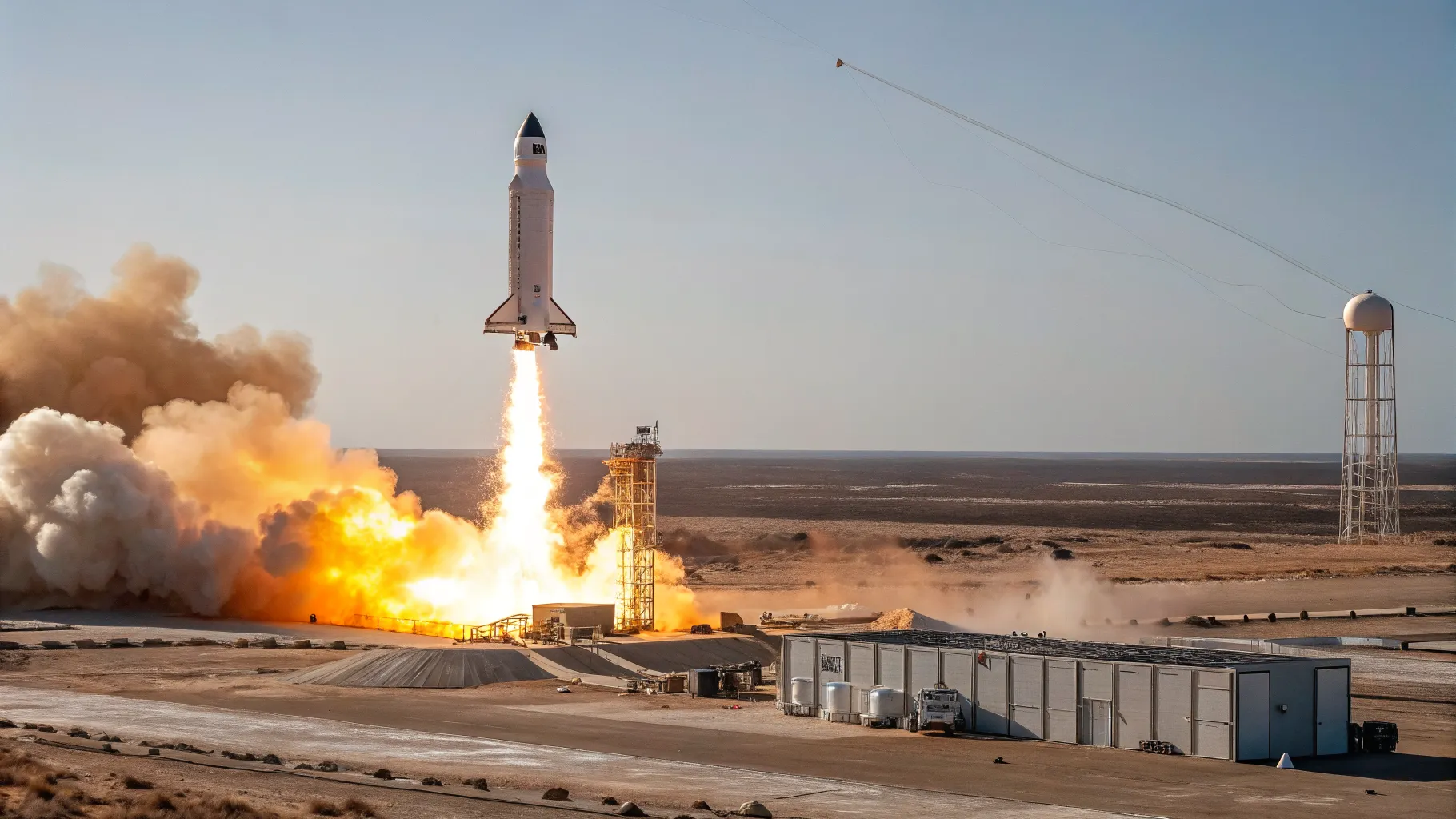
SpaceX launched its largest Starship on a test flight Friday, reaching its target before the vehicle exploded, an outcome the company framed as part of its plan. The flight, billed as a milestone for the fully reusable rocket system, ended in flames after the mission objective was met, according to the company. The test keeps SpaceX on its rapid schedule of iterative flights meant to speed development of a deep-space transport system.
Background: An Ambitious Test Program
Starship is SpaceX’s two-stage rocket designed to carry heavy cargo and crews to the Moon and Mars. The vehicle stands taller than any previous rocket and is intended to be fully reusable. SpaceX’s approach relies on frequent testing, including flights that may fail. The company has said this method cuts development time and costs.
Past Starship tests have included successful climbs to high altitude, controlled descents, and fiery endings. Each flight has added data on engines, guidance, heat shielding, and staging. Friday’s mission followed that pattern. It ended in an explosion after meeting its goal, which SpaceX said was expected.
What SpaceX Said Happened
“SpaceX launched its biggest, most powerful Starship yet on a test flight Friday.”
“The spacecraft reached its final destination before erupting in flames. That part was not unexpected, SpaceX said.”
The company framed the result as a planned end to a targeted test. It did not characterize the explosion as a surprise. Rather, it suggested the flight returned the engineering data that teams wanted at this stage.
Why the Flight Matters
Starship is central to a new generation of heavy-lift missions. Space agencies and private firms are watching closely because the system could lower launch costs, expand satellite deployment, and enable long-distance crewed missions. The test adds to a growing body of evidence that the vehicle can complete key steps under real flight conditions.
If the system becomes operational, it could reshape how often and how cheaply payloads reach space. That would affect communications, climate monitoring, planetary science, and crewed exploration. The path to that outcome still runs through test flights that may end in loss of vehicles.
Supporters and Skeptics Weigh In
Backers of SpaceX’s approach argue that controlled failures teach engineers faster than ground simulations. They point to rapid improvements between flights. They also note that each mission has refined engines, flight software, and structural design.
Critics warn that repeated explosions raise safety and environmental questions. They call for strict oversight of debris, noise, and risk to nearby communities. They also press for clear communication on flight hazards and post-flight cleanup.
What Was Learned This Time
While details from the company were brief, the sequence suggests progress on navigation and mission timing, given that the rocket reached its intended target. An intentional termination after reaching that point implies testing of end-of-mission procedures and structural limits. Data from sensors across the vehicle will inform changes to propulsion, thermal protection, and stage interfaces.
What Comes Next
Expect SpaceX to review telemetry, identify weak points, and prepare another flight. The company’s cadence aims to shorten the gap between tests, using design tweaks and revised flight rules. Future missions will likely focus on longer flight durations, reentry heating, and recovery steps for both stages.
- More data on engine reliability under full thrust
- Heat shield performance during high-speed flight
- Refinements to flight software and guidance
The next flights will show whether these adjustments lead to stable flight profiles and controlled returns. That will be key for reusability, which underpins the business case for frequent, lower-cost launches.
Friday’s test met its target and ended in flames, as planned, according to the company. For SpaceX, that counts as progress. The coming months will reveal if the lessons learned can turn brief wins into repeatable performance, bringing the Starship program closer to operational missions and the broader goals of deep-space travel.

Rashan is a seasoned technology journalist and visionary leader serving as the Editor-in-Chief of DevX.com, a leading online publication focused on software development, programming languages, and emerging technologies. With his deep expertise in the tech industry and her passion for empowering developers, Rashan has transformed DevX.com into a vibrant hub of knowledge and innovation. Reach out to Rashan at [email protected]