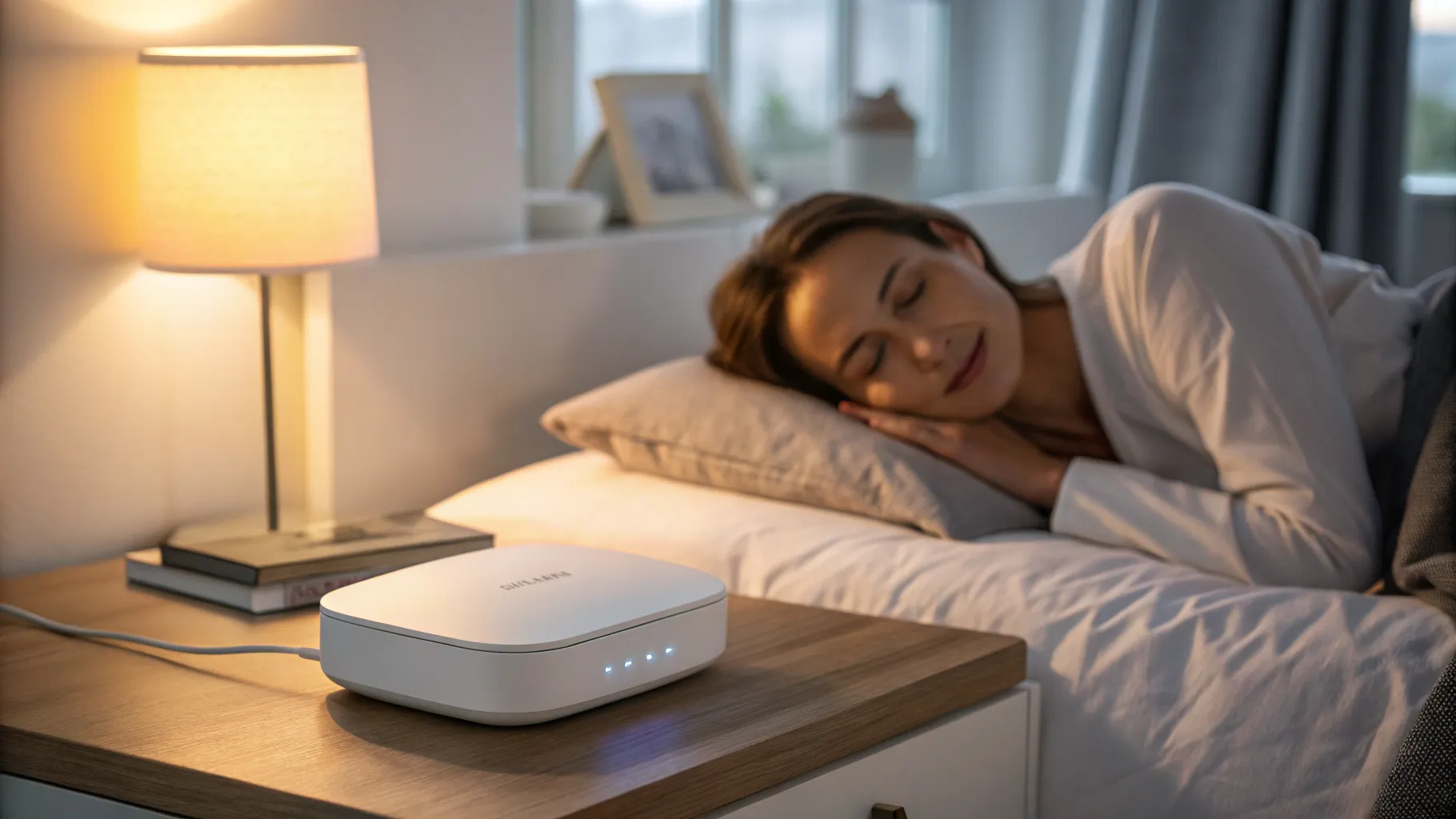
A Boston startup is building a model to help diagnose and treat brain disorders using data recorded while people sleep at home, aiming to bring hospital-grade insights to bedrooms. The effort, led by MIT alumnus Jake Donoghue and former MIT researcher Jarrett Revels, focuses on analyzing nightly brain activity to guide clinical decisions and speed research.
The company says its approach could lower costs, widen access to testing, and capture real-world data that traditional lab studies miss. It is working to translate sleep signals into indicators for conditions that range from epilepsy to depression.
Why Sleep Signals Matter
Sleep is a window into the brain. Many neurological and psychiatric conditions alter sleep architecture, arousal patterns, and electrical activity. Polysomnography and electroencephalography (EEG) have long been used in clinics to detect seizures, sleep apnea events, and abnormal rhythms. But these tests usually occur in labs, over a single night, and can be expensive and inconvenient.
Collecting data at home allows repeated measurements under typical conditions. That can reveal patterns that single-night studies miss, such as fluctuating seizure risk, medication effects, or gradual cognitive decline. It may also encourage earlier screening for patients reluctant to seek in-lab testing.
Inside the Model-Building Effort
The firm’s goal is to translate raw sleep recordings into clinically useful outputs. That includes automated sleep staging, detection of abnormal waveforms, and risk scores that physicians can interpret. The approach relies on large datasets collected from consumer-grade or medical-grade devices and paired with clinical labels.
“[The company is] creating a model to help diagnose and treat brain disorders, based on data collected while people sleep at home.”
Founders Donoghue and Revels bring experience in computational methods and translational research. Their plan centers on training algorithms to spot subtle signals that humans may overlook at scale, while preserving physician oversight.
Opportunities And Hurdles
At-home recording could help close gaps in access to neurological care, especially in rural areas or for patients with mobility limits. It could also support decentralized clinical trials, where continuous home monitoring shortens timelines and increases data quality.
- Access: Home devices can reach patients who lack specialty clinics nearby.
- Frequency: Repeated nights reveal trends, not one-off snapshots.
- Cost: Lower-priced monitoring may reduce barriers to screening.
- Equity: Broad participation can improve model fairness if datasets are diverse.
Still, challenges remain. Algorithms trained on narrow populations may underperform for others. Noise from consumer devices can hinder accuracy. Clinicians need clear, interpretable outputs, not black-box scores. And insurers and regulators will expect evidence that model-guided care improves outcomes.
Data Governance And Clinical Validation
Any system built on sleep data must address privacy and consent. Clear policies for de-identification, secure storage, and patient control are essential. Transparent documentation of how models are trained, tested, and updated builds trust with health systems and institutional review boards.
Clinical validation will likely proceed in phases: retrospective studies to benchmark performance, prospective studies to test generalization, and pragmatic trials to measure impact on diagnosis time, treatment selection, and patient-reported outcomes. Partnerships with hospitals and academic centers can supply the diverse data needed for reliable performance.
Industry Signals And What Comes Next
Interest in digital biomarkers has grown as wearable adoption increases and neurology seeks earlier, more objective measures. Sleep-based metrics are central to this push, offering noninvasive signals tied to cognition, mood, and seizure activity. Payers have begun reimbursing remote physiologic monitoring in some cases, a sign that economics may align if clinical value is proven.
For Donoghue and Revels, the next steps likely involve expanding datasets, publishing validation results, and pursuing regulatory pathways for decision-support tools. Health systems will watch for evidence that home sleep data can reduce misdiagnosis, shorten time to therapy, and improve quality of life.
The project reflects a broader shift to measure brain health continuously, not episodically. If successful, home-based sleep analysis could give clinicians earlier warnings and more precise guidance, while giving patients an easier path to care. The coming year should reveal whether these models can meet clinical standards and scale responsibly.

Rashan is a seasoned technology journalist and visionary leader serving as the Editor-in-Chief of DevX.com, a leading online publication focused on software development, programming languages, and emerging technologies. With his deep expertise in the tech industry and her passion for empowering developers, Rashan has transformed DevX.com into a vibrant hub of knowledge and innovation. Reach out to Rashan at [email protected]