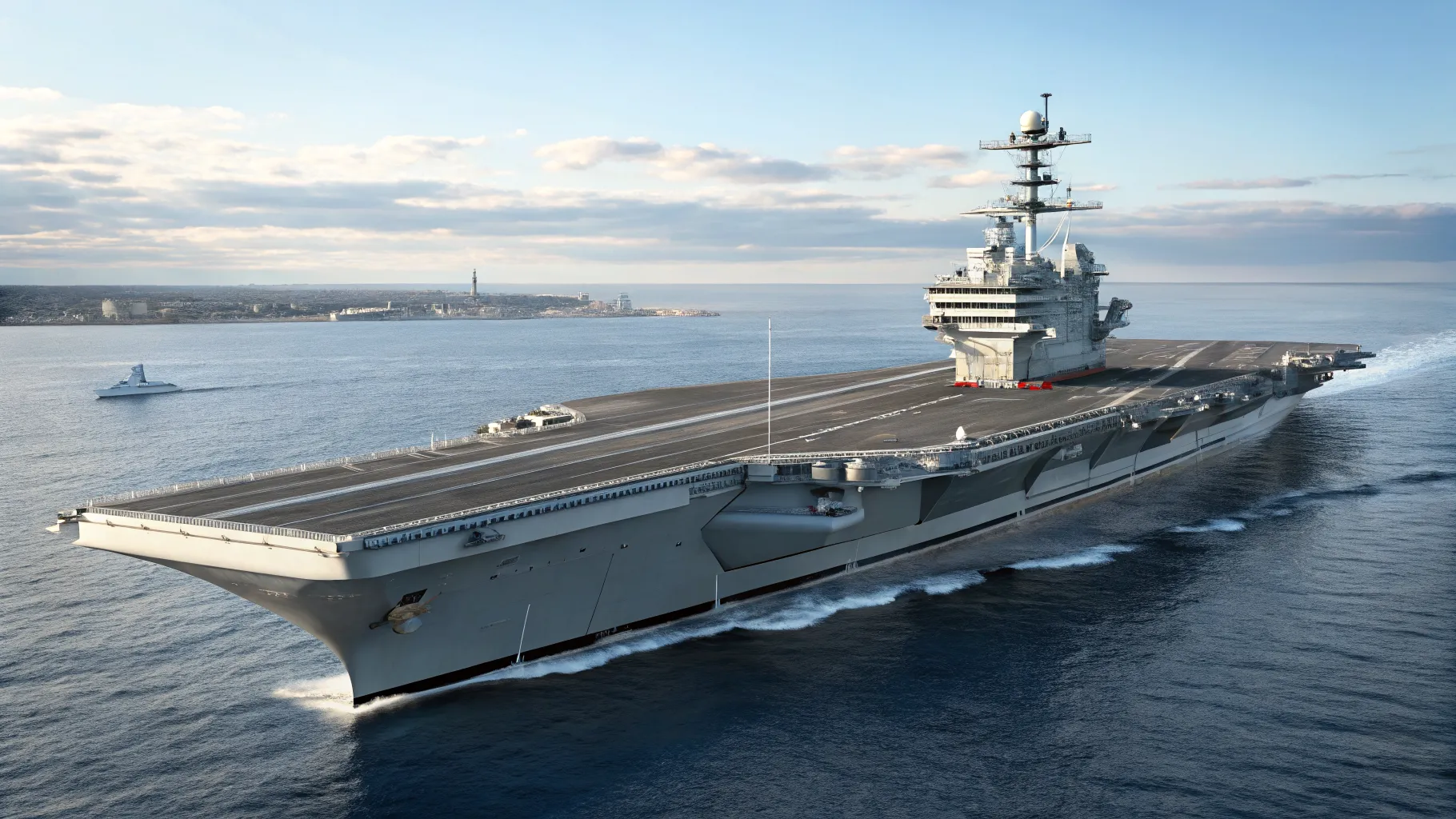
The U.S. Navy has begun a review of the design and costs of its Ford-class aircraft carrier, the service’s most advanced and expensive warship. The move comes as budget pressures rise and reliability questions linger after the first-in-class ship completed a high-profile deployment last year. The review will assess whether promised gains in capability and lower crew size are matching real-world performance across the fleet.
“The Navy is reviewing the design and costs of its Ford-class aircraft carrier, one of its most high-tech and expensive warships.”
The Ford class was built to replace the Nimitz class with new systems meant to launch more aircraft, reduce maintenance, and cut manpower needs. The first ship, USS Gerald R. Ford (CVN-78), spent months in the Mediterranean in 2023 and 2024 and returned with mixed feedback. Supporters pointed to improved flight deck operations and power margins. Skeptics pressed the Navy on repeated reliability issues tied to new launch, recovery, and weapons handling systems.
Why the Review Matters
Carrier programs shape U.S. naval power for decades. Each ship costs tens of billions of dollars when research, development, and construction are tallied. Decisions taken now will affect shipbuilding schedules, industrial jobs, and the Navy’s ability to sustain presence overseas. A design and cost review signals that leaders want clear evidence that upgrades on paper are delivering at sea.
Congress has increased scrutiny of the class as costs climbed and technical delays mounted. Independent watchdogs have also urged the Navy to improve testing and fix reliability shortfalls before buying ships in larger numbers. The review could inform future budgets and contract terms for follow-on ships already under construction.
A Program Built on New Tech
The Ford class replaces steam catapults and older arresting systems with electrical and digital gear. These changes aim to speed flight operations and reduce strain on aircraft. They also depend on complex software and extensive testing to meet targets.
- Electromagnetic Aircraft Launch System to replace steam catapults.
- Advanced Arresting Gear for aircraft recovery.
- Advanced weapons elevators to move munitions faster and safer.
- New dual-reactor power plant with large growth capacity.
Early in the program, the elevators and launch and recovery systems faced reliability issues that delayed full use. The Navy reports steady progress, but key measures such as mean cycles between critical failures still draw questions. The review is expected to look at remaining gaps and the cost to close them.
Cost Pressures and Oversight
Sticker shock has long defined the program. The lead ship’s construction price ran above earlier plans, while inflation and supply chain strains added pressure in recent years. Lawmakers set cost caps and demanded quarterly updates. Government auditors have urged better testing before installation to avoid expensive rework on completed ships.
Procurement for the next two carriers, John F. Kennedy (CVN-79) and Enterprise (CVN-80), was bundled to save money through bulk buys and stable workload. Any redesigns that come from the review must be weighed against those savings. Changes that improve reliability but disrupt the build plan could erase planned efficiencies.
Industry and Fleet Impact
The carrier industrial base relies on predictable orders and design stability. Hundreds of suppliers provide specialized parts that are hard to replace. A major redesign could affect delivery dates and labor plans at the lead shipyard and across the supply chain. On the other hand, locking in fixes now may prevent costly yard periods later.
For the fleet, the stakes are daily. Carrier air wings need high sortie rates and reliable deck gear to train and deploy. If systems fall short at sea, maintenance grows and time on station shrinks. The review will weigh whether performance trends support the planned carrier force levels through the 2030s.
What Comes Next
The Navy is expected to outline the scope of the review, timelines, and any early corrective actions in upcoming budget documents and testimony. Results could range from software and parts upgrades to changes in testing, training, and contracting. A smaller set of targeted fixes would keep schedules steady. Larger design shifts could ripple into future deliveries.
Analysts say the key questions are simple: Are reliability metrics improving fast enough, and are life-cycle costs falling as promised? If the answers are yes, the program can proceed with more confidence. If not, leadership may face hard choices on pace, scope, and funding.
The review marks a practical check on an ambitious program. It recognizes progress while confronting gaps that remain. Readers should watch for updates on elevator availability, launch and recovery reliability, and any budget changes tied to the next two ships. Those signals will show whether the Ford class is on a stable path or due for a course correction.

Kirstie a technology news reporter at DevX. She reports on emerging technologies and startups waiting to skyrocket.