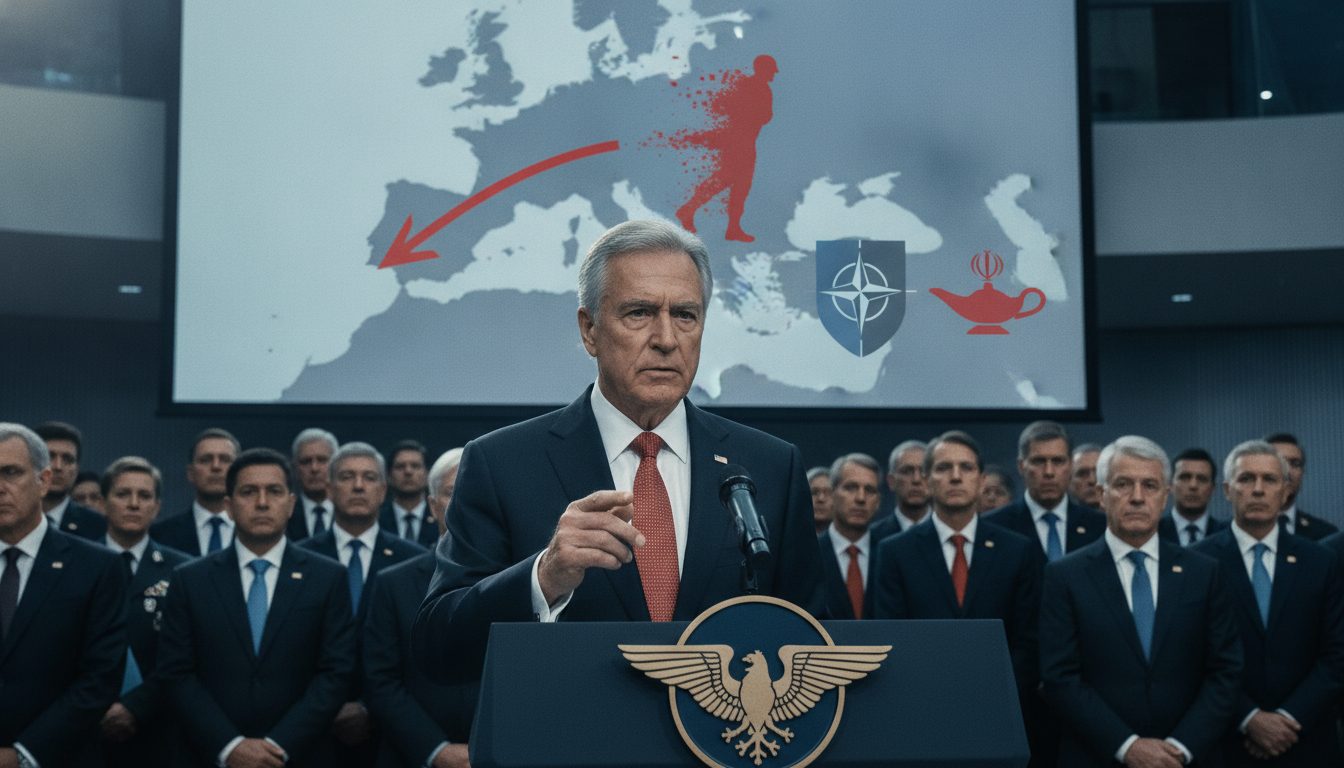
The U.S. president threatened to withdraw American troops from Europe and criticized NATO’s position on a possible war involving Iran, raising fresh questions about alliance unity and security. The remarks, delivered in recent comments, challenge decades of U.S. posture in Europe and add tension to ongoing debates over defense burdens and Middle East policy.
The statement arrives as European allies navigate war on NATO’s eastern flank and shifting energy and security risks. It also tests the alliance’s resolve on shared defense and crisis management, while putting pressure on governments to clarify how they would respond if U.S. forces depart.
What Was Said
“President also threatens to pull all American troops from Europe and rails against Nato stance on Iran war.”
The message signals a potential break with long-standing U.S. commitments. While the president offered no timeline or plan, the phrase “pull all” suggests a sweeping change, not a partial drawdown. The criticism of NATO over Iran policy hints at a deeper split on how to handle a wider Middle East conflict and deterrence.
Why It Matters
U.S. forces have been stationed across Europe for generations. They train with allied militaries, support logistics and air defense, and act as a visible deterrent to adversaries. Their presence also enables fast reinforcement in a crisis.
A full withdrawal would force European states to fill gaps in air defense, surveillance, logistics, and ammunition stockpiles. Many allies have increased defense spending, with more members moving toward the 2% of GDP target. But integrating new capabilities takes time.
NATO does not lead combat operations in the Middle East. Its approach to Iran has focused on de-escalation, maritime security, and protecting member interests. A public clash over that stance could complicate alliance messaging and crisis coordination.
Reactions From Allies and Analysts
European officials, speaking generally in recent months on burden-sharing, have said they aim to carry more weight in defense. They also stress that the U.S. role remains central for deterrence and planning. Security analysts warn that a sudden pullback could embolden hostile actors and increase the risk of miscalculation.
Military planners point to the practical hurdles. Redeploying units, aircraft, and equipment across continents is complex and costly. It would affect supply lines that support operations in Eastern Europe and the Mediterranean. Families and host communities would also face abrupt change.
In Washington, any broad shift would draw congressional scrutiny on funding and treaty obligations. While the executive branch directs deployments, lawmakers control budgets and have signaled interest in preserving NATO’s strength.
Strategic and Economic Stakes
Global supply chains still feel the shock of regional conflicts. Energy markets react to risk in the Middle East, and shipping lanes face threats from drones and missiles. A breakdown in allied coordination on Iran would heighten those pressures.
A U.S. military exit from Europe could also alter procurement and industry plans. European states might accelerate joint air defense, munitions production, and digital command systems. That could strengthen Europe’s defense base over time, yet near-term gaps would remain.
- Deterrence: Fewer U.S. forces could weaken perceived tripwires.
- Costs: Rapid moves raise transport and readiness bills.
- Coordination: Diverging Iran policies could strain crisis planning.
- Industry: Europe may speed local defense production, but capacity ramp-up takes years.
What Could Happen Next
Allies may seek clarity from Washington on timelines, conditions, and which units could be affected. NATO leaders are likely to reaffirm collective defense and press for steady planning. European capitals could outline contingency steps for air defense, cyber support, and stockpiles if U.S. backing shrinks.
Diplomatic channels may focus on Middle East de-escalation while keeping open talks with Tehran’s neighbors and global partners. Naval escorts, missile defense coordination, and intelligence sharing will remain priorities if tensions rise.
Markets and voters will watch for signs of policy hardening or compromise. A calibrated statement from the administration, or a joint communique from allies, could steady nerves. Absent that, uncertainty may push governments to hedge with more spending and new regional security pacts.
The remarks have injected urgency into a debate long centered on cost-sharing and strategy. Allies now face a stark question: how to safeguard Europe while managing crises that stretch far beyond the continent. The next steps—clarifying U.S. intent, aligning NATO policy on Iran, and closing capability gaps—will shape transatlantic security for years to come.

A seasoned technology executive with a proven record of developing and executing innovative strategies to scale high-growth SaaS platforms and enterprise solutions. As a hands-on CTO and systems architect, he combines technical excellence with visionary leadership to drive organizational success.