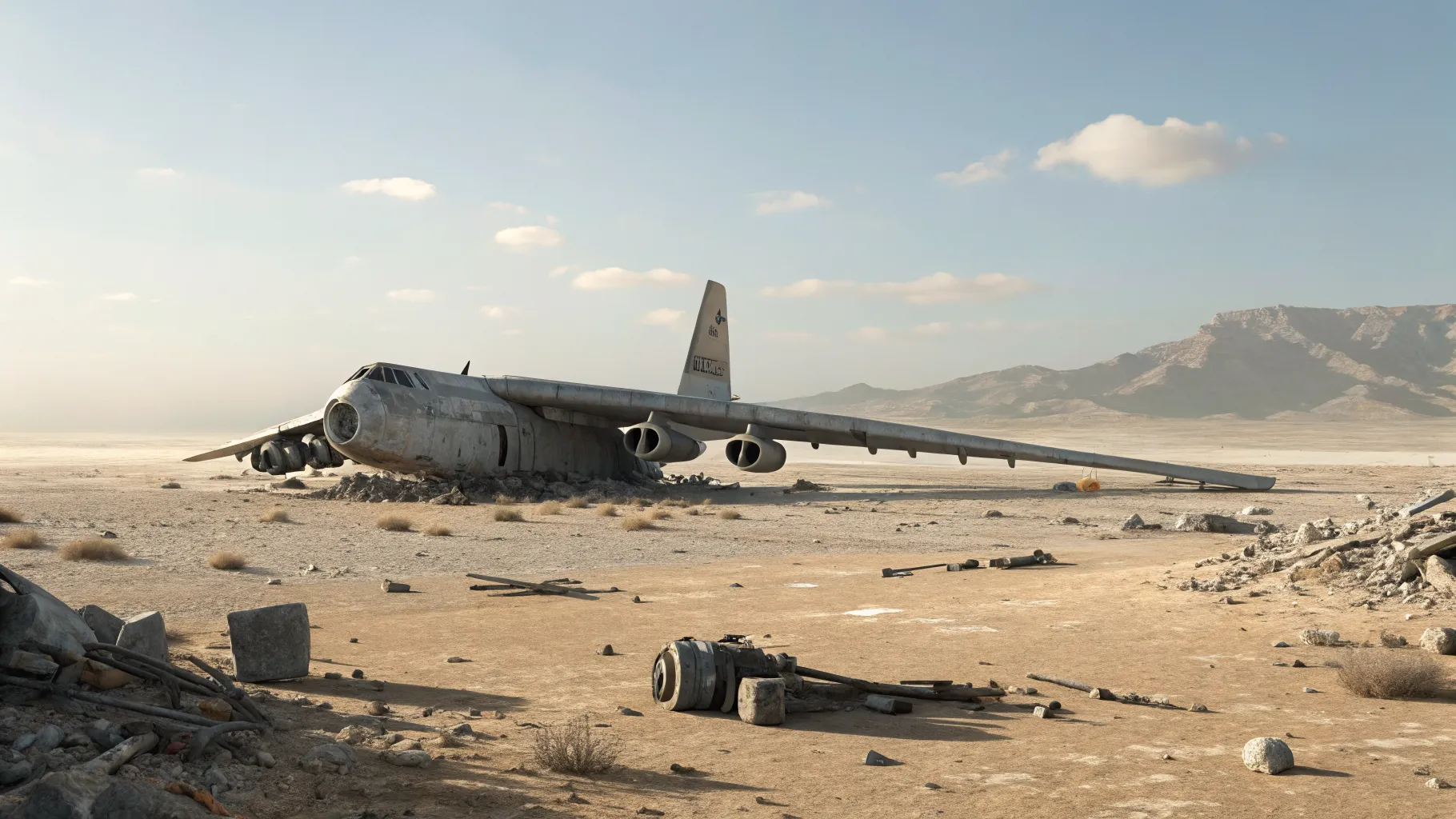
Eight aircrew members were killed when a Stratofortress bomber crashed shortly after takeoff from Edwards Air Force Base on Monday in California during a radar system test. The incident occurred during a flight dedicated to systems evaluation, highlighting the risks that can accompany routine and developmental military testing. Authorities have not released further details on the cause of the crash.
“All eight aboard the Stratofortress bomber, conducting a radar system test, died in the crash shortly after takeoff from Edwards Air Force Base in California on Monday.”
A High-Risk Mission at a Test Hub
Edwards Air Force Base sits in the Mojave Desert and serves as a primary U.S. hub for flight testing. It hosts experimental programs, certification flights, and systems trials for aircraft and avionics. Crews here regularly perform takeoffs and landings in challenging test conditions designed to validate performance and safety before wider use.
The Stratofortress, a long-range bomber with decades of service, often flies in diverse roles. These range from strategic missions to training flights and equipment trials. Radar testing is a core task for such aircraft, ensuring detection, tracking, and navigation systems function in real-world settings.
What Is Known So Far
The crash happened shortly after takeoff, a critical phase of flight when aircraft are low, slow, and heavily loaded. Early minutes after liftoff leave little margin for error. The flight was focused on a radar system test, indicating additional equipment or special procedures may have been in use.
Key facts reported:
- Eight personnel were aboard and all were killed.
- The flight originated at Edwards Air Force Base.
- The purpose was radar system testing.
- The crash occurred shortly after takeoff on Monday.
Background on the Aircraft and Testing
The Stratofortress has served the U.S. military for generations. Its large airframe allows integration of new sensors, communications links, and radar packages over time. That adaptability makes it a frequent platform for updates and evaluations.
Flight testing can involve staged scenarios to confirm system performance. Crews may run checklists that add workload while monitoring new equipment behavior. Even small anomalies in power, controls, or instrumentation can escalate quickly during the initial climb.
Safety, Investigation, and Next Steps
After accidents of this kind, the military typically launches a formal safety investigation board. Investigators will secure the site, review flight data, and examine maintenance records. They also interview ground personnel and analyze weather, configuration, and test procedures.
Common areas of inquiry include:
- Aircraft mechanical condition and recent maintenance.
- Test equipment wiring, integration, and weight balance.
- Crew training, duty hours, and test plan complexity.
- Weather, runway conditions, and emergency responses.
The findings often lead to safety advisories or changes in procedures. In some cases, similar test flights pause until causes are identified and mitigated.
Community and Military Impact
Losses at a test base ripple through units that train and work together daily. Teams share checklists, flight data, and lessons learned to reduce risk. The deaths of eight aircrew members will prompt reviews of current test schedules, readiness, and support resources for families and colleagues.
Testing is essential for fielding reliable systems. This crash will reframe discussions about pacing, redundancy, and contingency planning for future trials.
Balancing Innovation and Risk
Radar systems sit at the heart of modern air operations. Accurate detection and navigation protect crews and expand mission options. Yet developing and validating new capabilities carries risk, especially when combined with heavy aircraft and demanding procedures.
Military planners often weigh the need to upgrade systems against safety buffers in testing. The trade-offs can include added simulator time, extra chase-plane support, or narrower test points during early flights.
This crash marks a grave setback and a moment for close review. Investigators will seek causes, and leaders will decide whether to adjust upcoming tests. For now, attention centers on the fallen aircrew and the facts already confirmed. As the inquiry advances, expect guidance on procedures, training, and equipment checks meant to reduce risk on future sorties.

Kirstie a technology news reporter at DevX. She reports on emerging technologies and startups waiting to skyrocket.