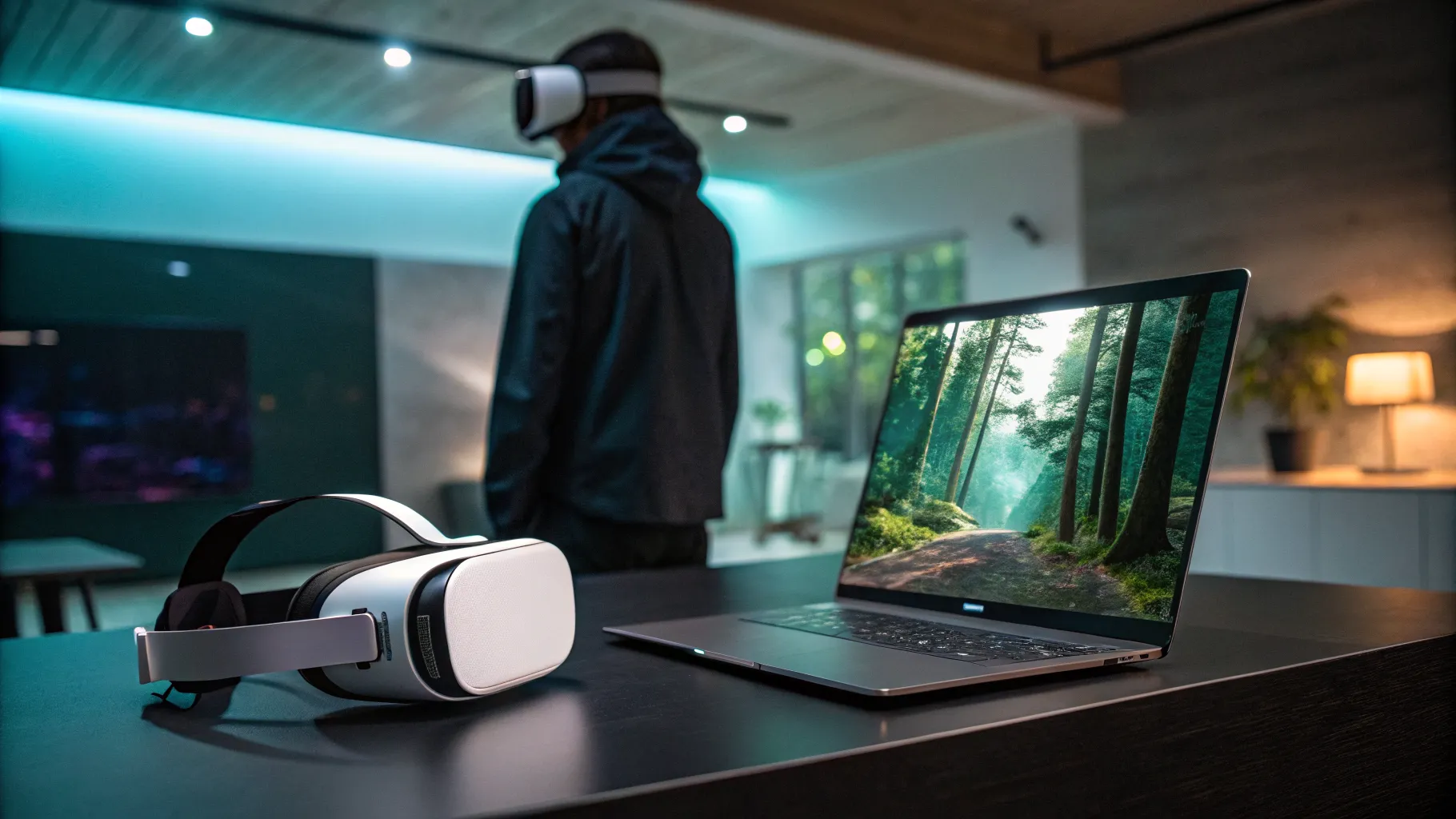
Virtual reality has grown more lifelike with crisp visuals and spatial audio, but one sense still lags: smell. As companies race to build fuller digital worlds, the lack of reliable scent limits how real these experiences feel and how widely they can be used.
Engineers and researchers across labs and startups are exploring scent devices that can fit into headsets or rooms. They say the gap matters now, as VR expands from gaming into training, health care, retail, and education. Without smell, users miss signals that guide memory, emotion, and safety in the real world.
The Missing Sense in Immersive Tech
Despite the many improvements in virtual reality (VR) technology, with realistic visual and auditory content that makes the user feel immersed in the environment, the olfactory sense has not been as faithfully replicated in the medium.
That view reflects a growing consensus in the field. Headsets deliver high refresh rates and precise head tracking. Audio now offers detailed 3D cues. But olfaction depends on chemistry, not light or sound. It is harder to package, time, and clear scents during fast scene changes.
Smell also influences how people judge freshness, danger, and place. In training for firefighters, medics, or food inspectors, the lack of scent can reduce realism. In entertainment, it may limit emotional impact and memory recall, which are strongly tied to odor.
Why Scent Simulation Is Hard
Creating a scent is different from playing a sound or showing a frame. It needs stored compounds, mixing, release, and removal. Each step can add delay or cause residue that lingers into the next scene.
- Timing: Scents spread and fade more slowly than light and sound.
- Variety: The nose can detect many odors; devices hold only a few.
- Safety: Compounds must be safe for repeated, close exposure.
- Hygiene: Hardware near the face needs strict cleaning or disposable parts.
- Cost and size: Adding cartridges or microfluidics raises price and weight.
Even when timing works, users respond to the same odor in different ways. That makes standard design and testing harder for content makers.
Emerging Approaches and Trials
Researchers are testing compact cartridges with common scents such as smoke, coffee, or pine. Some systems heat tiny amounts to boost release and then use fans or vacuum to clear the air. Others try skin-worn patches that emit odor near the nose instead of inside a headset.
Room-scale setups place diffusers around a space to create zones of smell. These can deliver stronger cues but need careful airflow control. They also make home use and quick setup more difficult.
Software is another piece. Developers map odors to events, set intensity curves, and add cooldown periods to reduce overlap. Tools that help creators tag scenes with scent events could ease adoption once hardware stabilizes.
Safety, Ethics, and Standards
Odor compounds must pass health checks for allergies, irritation, and long-term use. Clear labeling and replaceable parts are basic needs. Child users and people with asthma or scent sensitivity need extra care.
Privacy is a newer concern. Some teams are exploring odor-based biometric signals and attention tracking. Such features raise questions about consent and data protection.
Industry standards would help with cartridge formats, safety testing, and content tags. Shared rules could lower costs and reduce risk for app makers and schools.
Market Impact and What Comes Next
Training and simulation may lead the way. A limited set of reliable scents could add value for first responders, food safety teams, and medical staff. Location-based entertainment could also use room systems where staff can maintain gear.
Home use will likely take longer. Consumers expect light, low-cost headsets. Any add-on must stay small, simple, and safe. Subscription models for refill packs are possible but unproven.
For now, developers can design content that works with or without scent. Optional support lets early adopters try it while others keep a clean setup. If hardware matures, more apps can switch it on.
Smell remains the toughest sense for VR, but progress is steady. Teams are shrinking devices, improving airflow, and picking safer compounds. The next year will show if pilot programs in training and themed venues can prove demand. If they do, makers may find a practical path to add scent to consumer headsets, bringing virtual worlds a step closer to how people actually experience life.

Senior Software Engineer with a passion for building practical, user-centric applications. He specializes in full-stack development with a strong focus on crafting elegant, performant interfaces and scalable backend solutions. With experience leading teams and delivering robust, end-to-end products, he thrives on solving complex problems through clean and efficient code.