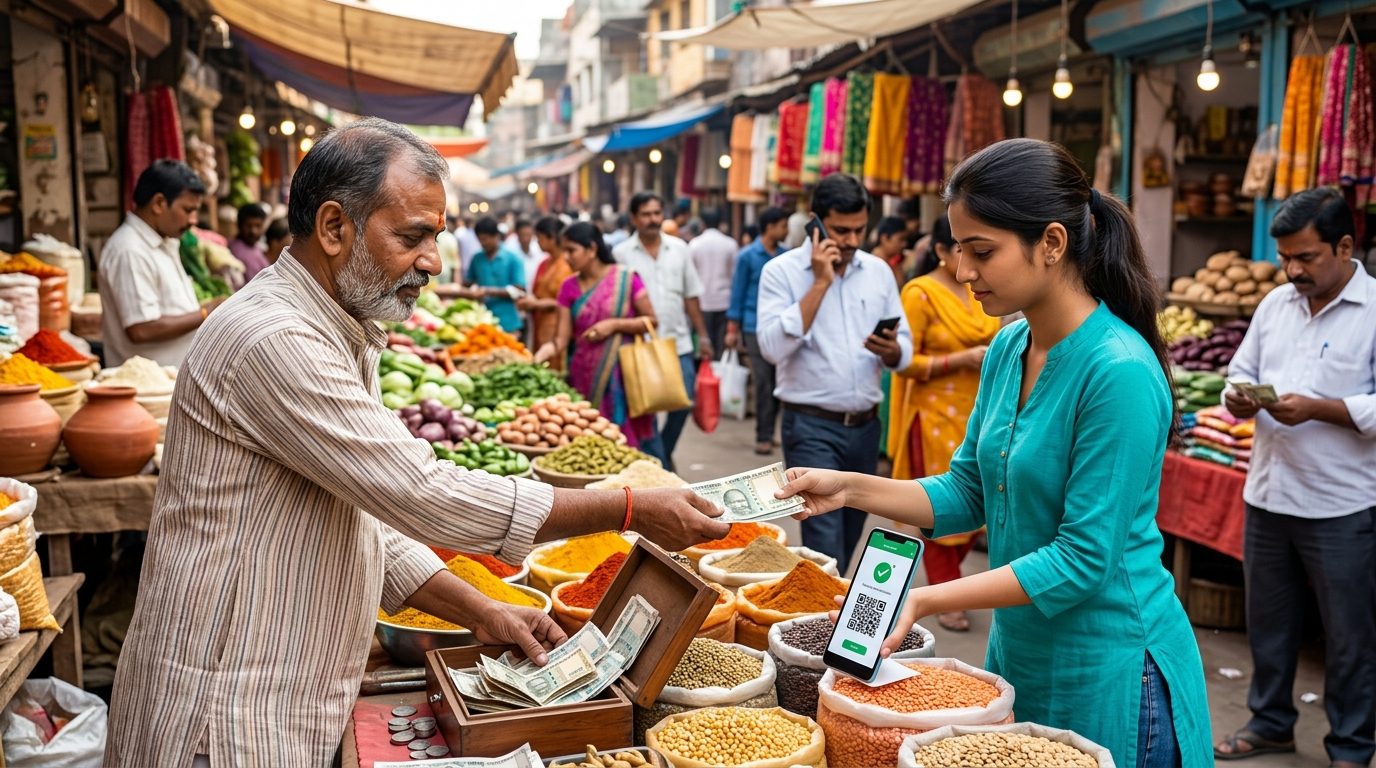
India’s rapid shift to digital payments has not displaced cash, according to central bank data that points to a two-track economy. Consumers are using electronic services more often, while banknotes remain central to daily trade across the country.
The finding challenges the idea that digital growth must cause an equal decline in cash use. Instead, both payment methods are serving different needs within India’s large and diverse economy.
Digital Growth Changes Everyday Commerce
Digital payment services have made small transactions faster and easier. Mobile apps now allow consumers to pay merchants, transfer money, and settle bills without visiting a bank.
For businesses, electronic transactions can shorten checkout times and create clearer payment records. They can also reduce the need to store and transport physical currency.
India has supported this shift through public digital systems, wider smartphone access, and bank-linked payment tools. Merchants ranging from major retailers to street vendors increasingly display digital payment options.
Central bank data nevertheless indicates that this expansion is adding payment choices rather than creating a fully cashless economy. The central finding is direct:
“Digital payments are booming, yet cash remains deeply embedded in the economy in India.”
Why Cash Continues to Matter
Cash offers features that electronic systems cannot always match. It works without a phone, electricity, internet access, or immediate approval from a financial institution.
Those advantages matter in rural areas and during network interruptions. They also help workers, small traders, and households that have limited access to formal banking services.
Consumers may prefer notes and coins for small purchases or household budgeting. Some merchants also favor cash because payment is immediate and does not depend on technical systems.
Several factors help explain its lasting role:
- Uneven access to smartphones and reliable mobile networks
- Limited digital skills among some consumers
- Privacy concerns surrounding recorded transactions
- Dependence on cash in informal and local trade
Two Systems Grow Side by Side
Digital transaction growth and continued cash use are not conflicting trends. A growing economy can support higher activity across several payment channels at once.
A consumer might receive wages through a bank account, pay utility bills electronically, and still use cash at a neighborhood market. Small businesses may accept both methods to avoid losing customers.
This mixed model offers flexibility, but it also creates policy challenges. Banks and payment operators must maintain secure digital networks while ensuring that people can still obtain and use currency.
Electronic fraud, data protection, service outages, and consumer education remain concerns as adoption rises. Cash presents separate costs, including printing, distribution, storage, and security.
What Policymakers Must Watch
The data suggests that payment policy should focus on access and reliability rather than assume cash will quickly disappear. Digital services need to remain affordable, simple, and safe for first-time users.
Authorities must also monitor whether payment changes exclude older people, low-income households, or communities with weak connectivity. Keeping multiple options available can protect consumers during technical failures and emergencies.
India’s payment habits are likely to keep changing, but the current direction is clear. Digital services are gaining ground without erasing demand for physical money.
The next test will be whether digital growth reduces cash dependence over time or settles into a lasting hybrid system. For now, India shows that a payments boom can expand consumer choice while leaving an older form of money firmly in place.

A seasoned technology executive with a proven record of developing and executing innovative strategies to scale high-growth SaaS platforms and enterprise solutions. As a hands-on CTO and systems architect, he combines technical excellence with visionary leadership to drive organizational success.