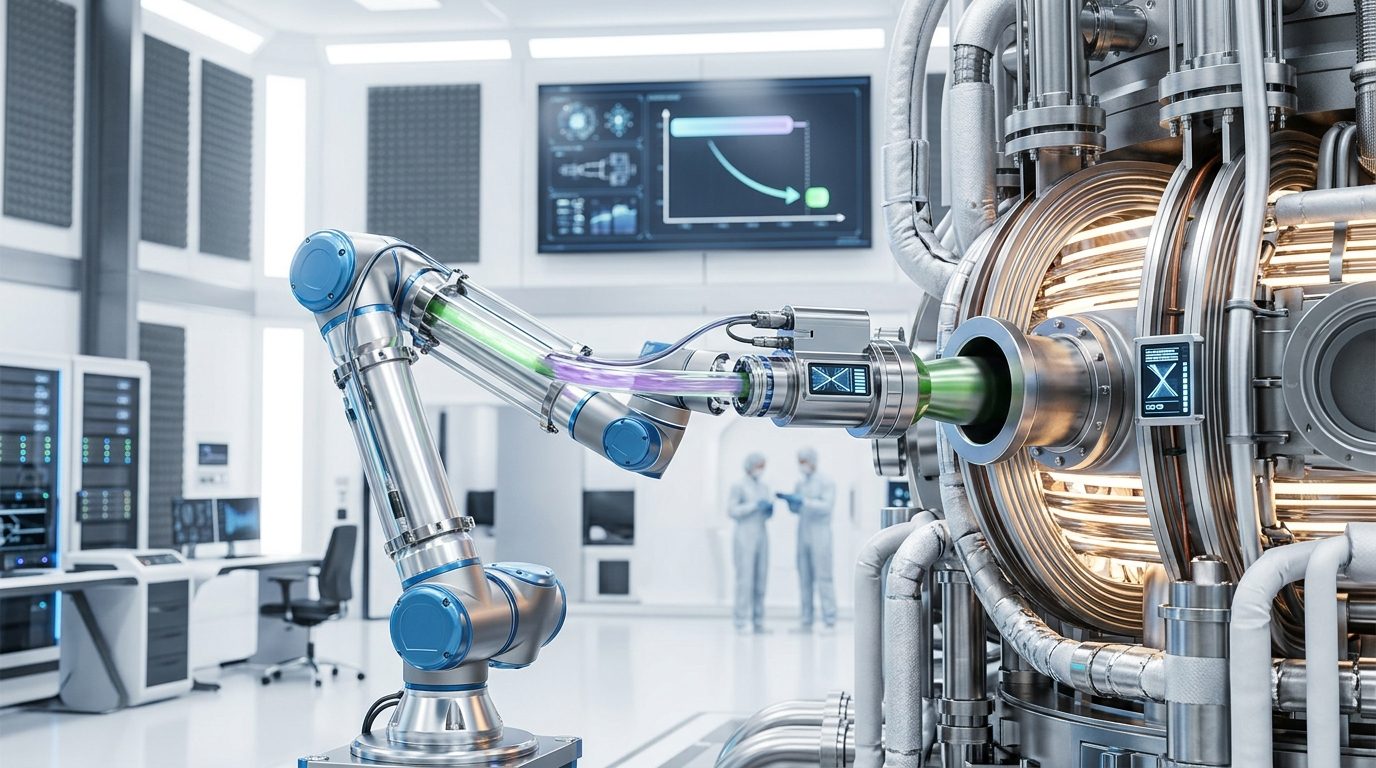
Fusion power startup Inertia Enterprises has cut its fuel-filling process from one week to several hours, clearing one of 10 hurdles it has identified for a profitable power plant.
The improvement could help the company run experiments more often and reduce operating delays. Yet the startup still faces nine other challenges before it can show that its technology works at commercial scale.
Faster Filling Could Lift Test Capacity
Fuel preparation can limit how often a fusion system operates. A week-long filling cycle may leave costly equipment idle between tests. Reducing that cycle to hours could support more experiments within the same period.
Inertia Enterprises “reduced the fuel filling process from a week to just a few hours.”
The shorter process may also give engineers faster feedback. Teams can test a design, review the results, and prepare another fuel load without waiting several days.
That matters for a startup trying to refine both its machine and its operating procedures. More test cycles can reveal equipment failures, production limits, and maintenance needs sooner.
However, speed alone does not prove that the process is affordable or reliable. A commercial plant would need consistent fuel quality, safe handling, repeatable production, and limited waste.
One Hurdle Among Ten
Inertia Enterprises describes fuel filling as one of 10 hurdles separating its current work from a profitable fusion plant. The list reflects a central challenge for fusion developers: a successful reaction is only part of a power business.
A plant must produce enough usable energy to cover its own needs and supply the grid. It must also operate often enough to repay construction, staffing, fuel, and maintenance costs.
Key commercial questions generally include:
- Whether equipment can withstand repeated fusion events
- How quickly fuel can be prepared and delivered
- How much energy reaches the electrical grid
- How often damaged parts require replacement
- Whether total costs can compete with other power sources
The company has not provided details here about the other nine hurdles, their status, or the cost of the faster filling method. Those measures will be important when judging the result.
Profitability Sets a Higher Standard
Fusion seeks to release energy by joining light atomic nuclei. The concept has attracted private investment because its fuels could offer large energy output without the carbon emissions produced by fossil-fuel combustion.
Turning that scientific goal into a power station requires much more than generating fusion reactions. Developers must convert the released energy into electricity, manage heat, protect machinery, and repeat the process at a practical rate.
For that reason, Inertia Enterprises’ focus on profitable power sets a higher bar than a laboratory demonstration. Investors and utilities will want evidence that each technical gain improves the economics of an entire plant.
The fuel-filling result is therefore best viewed as an operational advance rather than proof of commercial readiness. Its value will depend on whether the hours-long process remains reliable during repeated use and at larger scale.
Evidence Needed From Future Tests
Future disclosures could clarify how many filling cycles have used the new process and whether each load met the required standards. Data on labor, materials, energy use, and equipment wear would also help measure its commercial value.
The progress reported by Inertia Enterprises addresses a clear source of delay. Cutting a week-long task to hours may improve testing speed and plant availability.
Still, nine identified hurdles remain. The next test will be whether the company can repeat this result while solving the wider engineering and cost problems that determine if fusion can become a dependable power business.

Senior Software Engineer with a passion for building practical, user-centric applications. He specializes in full-stack development with a strong focus on crafting elegant, performant interfaces and scalable backend solutions. With experience leading teams and delivering robust, end-to-end products, he thrives on solving complex problems through clean and efficient code.