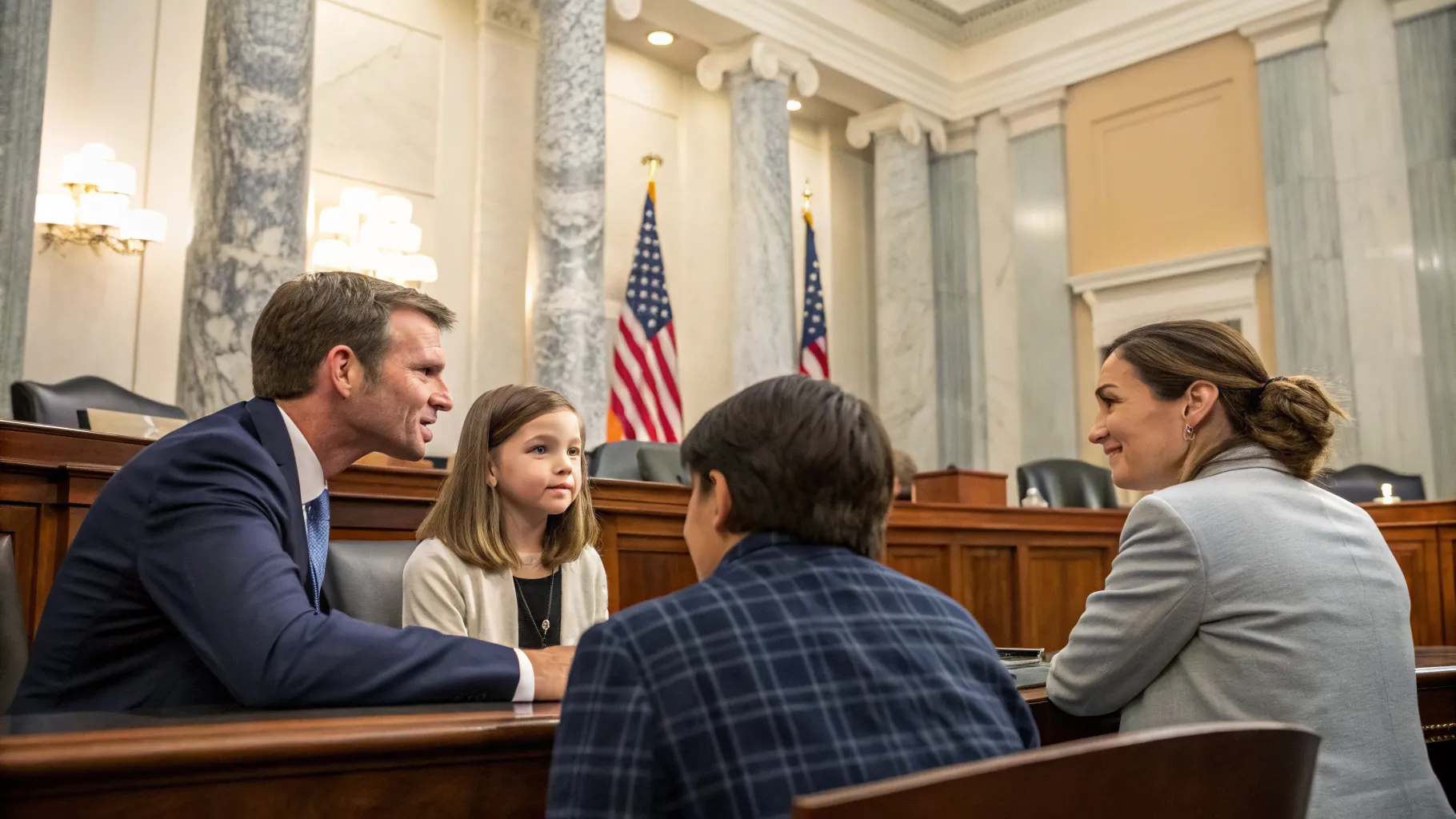
Parents and child-safety advocates returned to Capitol Hill on Tuesday, urging Congress to advance stalled online safety bills amid renewed confidence from recent legal developments. The gathering aimed to press lawmakers for stricter protections for minors using social media and digital platforms, highlighting mental health concerns, data collection, and exposure to harmful content.
Organizers said they want swift action in the current session, pointing to bipartisan interest and a series of policy proposals that have lingered without final votes. Their message was simple: families want clearer rules for how platforms design feeds, collect data, and verify ages.
A group of parents and advocates gathered on Capitol Hill on Tuesday in a renewed push for online safety legislation, hoping to build on the momentum of court wins.
Why Parents Are Pressing Now
Public anxiety about youth mental health has grown as social media use has become near-universal among teens. Federal surveys have shown persistent rates of anxiety and depression in adolescents over the past decade, while educators report rising concerns about cyberbullying and self-harm content.
Lawmakers in both parties have floated rules to limit algorithmic recommendations for minors, strengthen parental controls, and restrict targeted advertising to children. The ideas reflect a broader shift in Washington, where the focus has moved from voluntary safety features to mandated standards with accountability.
Legislation Back on the Agenda
Advocates cited several proposals that could shape a national approach. They referenced bills that would require platforms to provide default safety settings for minors, offer easy reporting tools, and make their risk assessments accessible to regulators and researchers. Age-appropriate design requirements remain central to the debate.
Parents also called for clearer duties of care, asking Congress to set baseline expectations for how companies identify and mitigate foreseeable risks to young users. Supporters argue that defined duties would reduce reliance on after-the-fact moderation and push companies to build safer products from the start.
- Default privacy and safety settings for minors
- Limits on targeted ads to children and teens
- Greater transparency on recommendation systems
- Independent audits and reporting on youth risks
Legal Tailwinds and Ongoing Friction
Speakers pointed to recent court activity that, in their view, signals more room for policy action. Some rulings have allowed portions of youth-safety cases against large platforms to proceed, while others have tested state-level rules on age verification and design standards. Advocates said these developments suggest that lawmakers can craft measures that balance safety and rights.
Still, the legal terrain is uneven. Courts continue to examine how child-safety mandates intersect with the First Amendment, data privacy, and existing federal protections for online speech. State efforts have produced a patchwork with mixed results, adding pressure on Congress to set a uniform standard.
Industry and Civil Liberties Perspectives
Technology companies say they have expanded parental controls, launched teen-specific tools, and invested in content moderation. They warn that strict mandates could weaken encrypted services, push teens to less regulated corners of the internet, or limit helpful resources. Companies also caution that broad liability rules could stifle product improvements.
Free speech and privacy groups share some of those concerns. They argue that aggressive age verification could require collection of sensitive documents and raise new privacy risks for families. They also worry that overbroad content restrictions may chill lawful speech, including access to health or educational information for older teens.
Parents at the event acknowledged these trade-offs but urged lawmakers to prioritize clear safeguards. They asked for protections that are practical to implement, auditable by regulators, and enforceable when companies fall short.
What to Watch Next
Attention now turns to committee calendars and whether bipartisan sponsors can secure floor time before the year-end rush. Negotiators are weighing carve-outs for small services, safe harbors for research, and clearer definitions of harmful design features. Appropriators are also considering funding for enforcement and independent research.
If Congress advances a national standard, states may pause or revise their own measures. If federal action stalls, more state bills could emerge, intensifying the patchwork that platforms and families must navigate.
For families, the stakes remain high. Parents want simple controls, fewer risky recommendations, and confidence that services used daily by teens are safer by default. Lawmakers now face a narrow window to turn that demand into law.
Tuesday’s show of support suggests momentum, but the outcome will hinge on precise language, constitutional guardrails, and the ability of sponsors to keep a broad coalition together. The coming weeks will reveal whether Congress can meet that test.

A seasoned technology executive with a proven record of developing and executing innovative strategies to scale high-growth SaaS platforms and enterprise solutions. As a hands-on CTO and systems architect, he combines technical excellence with visionary leadership to drive organizational success.