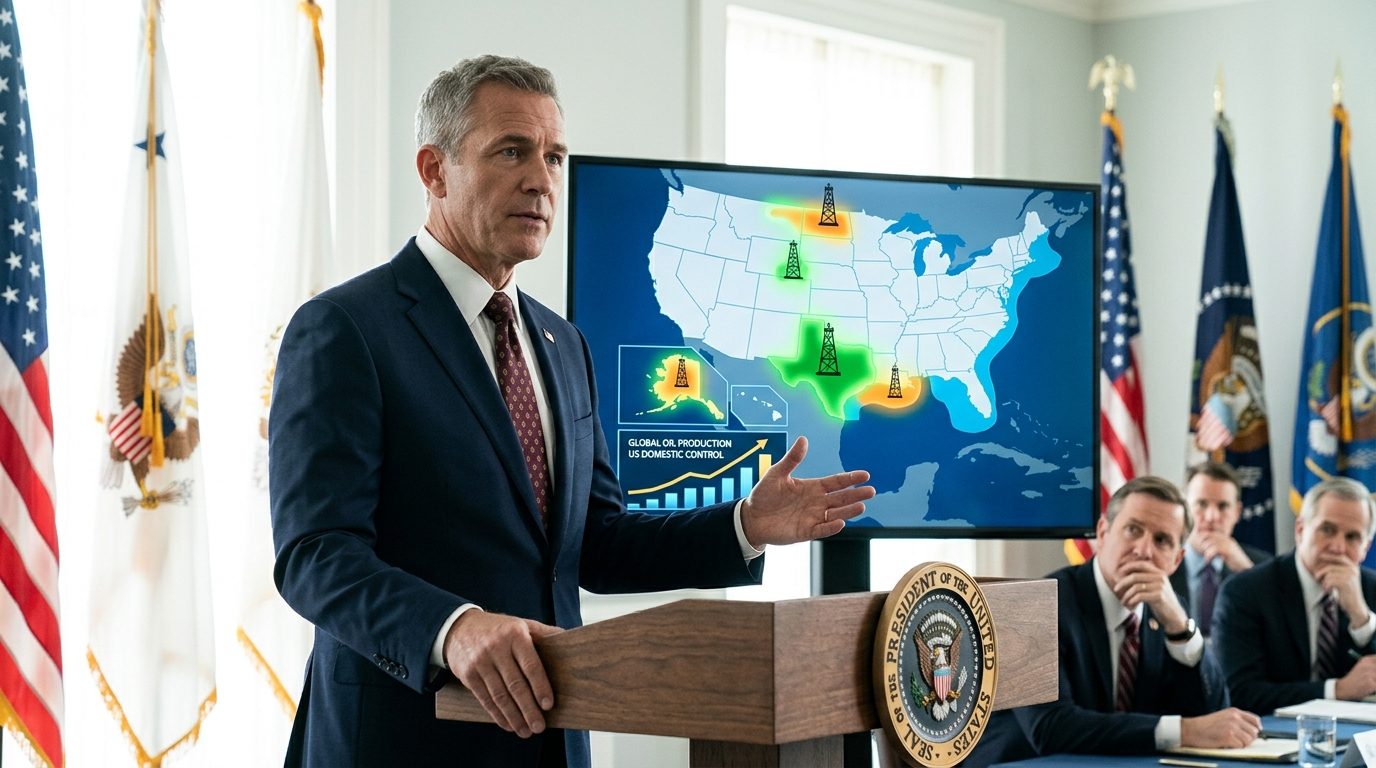
The US president has said the United States will gain “majority” control of 65 billion barrels of proven oil reserves, a claim with major economic and diplomatic stakes.
The statement did not identify the reserves, their location, or the legal structure behind the proposed control. It also gave no timetable. Those missing details limit any assessment of how the plan would affect oil production, prices, or US energy security.
Questions Surround the Control Claim
The president described the expected US position in direct terms.
The United States will have “majority” control of 65 billion barrels of proven oil reserves.
However, majority control can carry several meanings. It could refer to state ownership, corporate stakes, production rights, financing terms, or influence over export decisions.
Each model would create different legal and financial outcomes. Ownership of reserves also does not always provide authority over production. National laws, contracts, sanctions, and local regulators may still determine how oil is developed and sold.
The absence of a named country or project leaves several central issues unresolved:
- Which government or company currently controls the reserves
- Whether US control would involve ownership or operating rights
- What price, security commitment, or policy change may be required
- How quickly any additional oil could reach global markets
Why Proven Reserves Matter
Proven reserves are oil deposits considered recoverable under existing economic and operating conditions. The label does not mean all barrels can be produced quickly or at a profit.
A total of 65 billion barrels would represent a vast long-term resource. Yet its market value would depend on production costs, oil quality, transport links, political stability, and available investment.
Large reserves often require years of drilling and infrastructure work. Pipelines, ports, refineries, equipment, and trained workers may be needed before production can rise. Environmental approvals and local opposition can also slow projects.
Potential Market and Diplomatic Effects
If backed by a binding agreement, the arrangement could strengthen US influence over future energy supplies. It could also give American companies access to new projects and reduce exposure to selected foreign suppliers.
The immediate effect on fuel prices may be limited. Oil prices respond more directly to current production, demand, inventories, conflict, and decisions by major exporters. Reserves that remain underground do not add near-term supply.
Any effort by Washington to secure majority control could also face scrutiny abroad. The host country’s lawmakers, courts, citizens, and state oil company may challenge terms viewed as reducing national authority over natural resources.
Other producing nations could treat the move as a shift in US energy policy. Allies may seek access guarantees, while competitors could pursue rival investments or political agreements.
Evidence Will Determine the Impact
The president’s statement sets out an ambitious outcome, but it does not establish that control has been secured. Confirmation would require contracts, government approvals, ownership records, or an official agreement naming the parties.
Investors and policymakers will watch for details about the reserve location, the meaning of control, and the expected production schedule. They will also examine whether sanctions, security risks, or infrastructure gaps could restrict development.
Until those facts are released, the 65 billion-barrel figure remains a major claim rather than a measurable change in global supply. The next test will be whether the administration presents a lawful deal, clear terms, and a realistic path from reserves to production.

Deanna Ritchie is a managing editor at DevX. She has a degree in English Literature. She has written 2000+ articles on getting out of debt and mastering your finances. She has edited over 60,000 articles in her life. She has a passion for helping writers inspire others through their words. Deanna has also been an editor at Entrepreneur Magazine and ReadWrite.