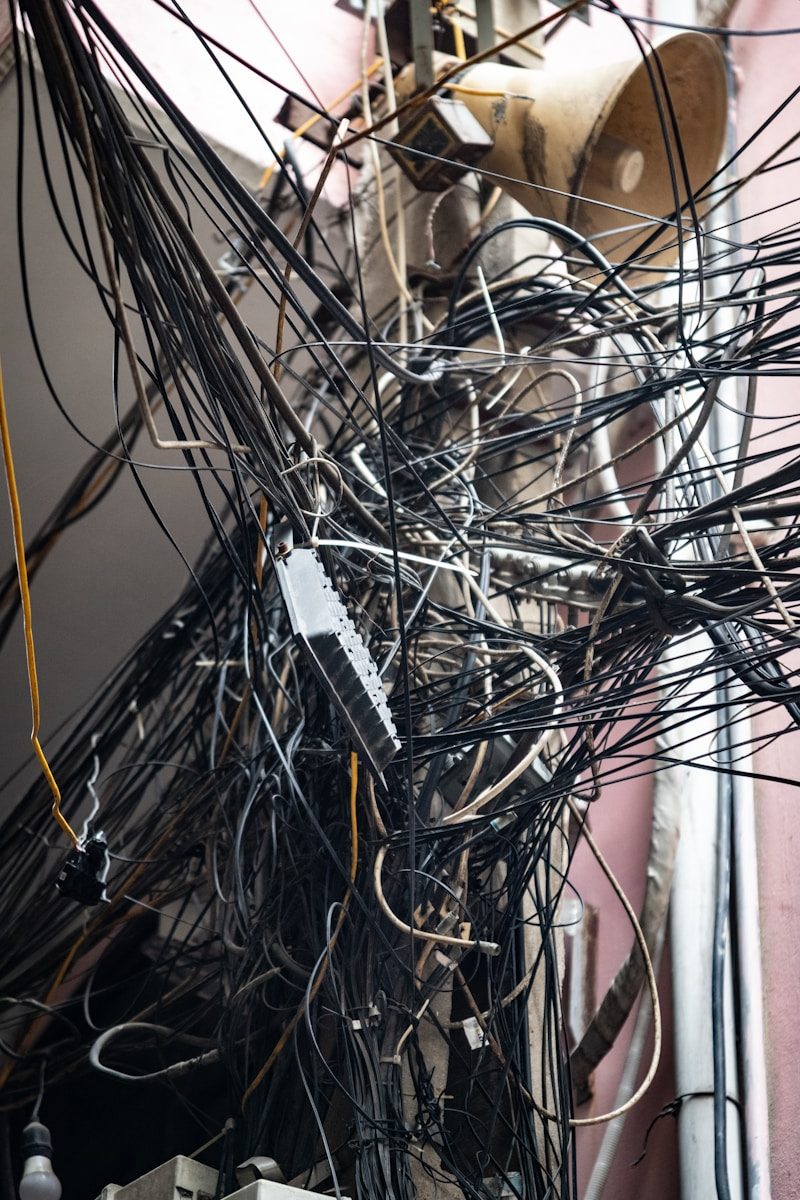
Concurrency bugs rarely announce themselves as such. They show up as latency spikes, throughput drops, CPU thrashing, or timeouts under load. The dashboards say “performance regression,” and teams respond accordingly by scaling horizontally, tuning queries, or adding caches. Weeks later, nothing is fixed because the system was never slow in the traditional sense. It was contended, deadlocked, or violating ordering guarantees. If you’ve ever chased a phantom performance issue that disappeared when traffic dipped, you’ve likely been here. The distinction matters because the mitigation strategies are fundamentally different, and misdiagnosis compounds both cost and complexity.
1. Latency correlates with concurrency level, not workload complexity
If your p95 latency climbs linearly with concurrent requests rather than request complexity, you are probably looking at contention, not slow code paths. This shows up in systems where mutexes, connection pools, or thread pools become bottlenecks. In one high-throughput payments system running on Java and PostgreSQL, latency doubled when concurrency crossed 400 requests per second, even though individual query times stayed flat. The root cause was lock contention on a shared in-memory structure, not database performance. Performance tuning would not fix that. Reducing critical sections or introducing lock-free data structures did.
2. Scaling out increases the failure rate instead of improving the throughput
Performance problems usually improve with horizontal scaling. Concurrency issues often get worse. Adding more instances amplifies race conditions, increases contention on shared dependencies, and surfaces coordination bugs. If doubling your service instances leads to more timeouts or inconsistent results, you are likely dealing with synchronization or ordering issues. Distributed locks, leader election, or idempotency guarantees become the real solution space, not autoscaling policies.
3. CPU usage is high, but not doing useful work
High CPU often gets labeled as inefficiency. But in concurrent systems, the CPU can be consumed by spinning, lock contention, or excessive context switching. Threads waiting on locks still burn cycles. In a Go-based service using goroutines heavily, CPU hit 90 percent under load, but profiling showed most time spent in runtime scheduling and mutex contention, not business logic. The fix was restructuring shared state and reducing contention, not optimizing algorithms. Classic performance tuning misses this completely.
4. Metrics look healthy in isolation but degrade under coordination
A single service instance behaves perfectly in staging or low-load tests, yet production falls apart under coordinated traffic. That is a hallmark of concurrency issues. Unit benchmarks and isolated profiling rarely surface ordering bugs, race conditions, or distributed coordination failures. This is why systems like Netflix’s chaos engineering platform intentionally introduce concurrent failure scenarios. Performance issues are usually visible in isolation. Concurrency issues require interaction to manifest.
5. Retries and timeouts make things worse
When retries amplify failure instead of masking it, you are likely seeing a concurrency problem. Retries increase load, which increases contention, which further degrades the system. This positive feedback loop is common in distributed systems with shared dependencies like databases or message brokers. If retry storms correlate with outages, the system is not slow. It is failing to coordinate under pressure. Backpressure, circuit breakers, and load shedding become more relevant than query optimization.
6. Data inconsistencies appear alongside “performance” degradation
Performance issues do not usually corrupt data. Concurrency issues do. If you see stale reads, duplicate writes, or out-of-order events during periods of high latency, you are dealing with race conditions or missing transactional guarantees. In a Kafka-based event processing pipeline, lag spikes coincided with duplicate processing due to improper consumer group coordination. The system looked slow, but the real issue was incorrect offset management under concurrency. Fixing consistency resolved the perceived performance problem.
7. Fixes that “should” work have no impact
You optimize queries, add indexes, increase cache hit rates, and still see no improvement. That is often the final signal. Performance fixes target deterministic bottlenecks. Concurrency issues are nondeterministic and often probabilistic. Their symptoms fluctuate with timing, load patterns, and scheduling. If improvements do not predictably move metrics, it is time to shift your mental model from performance to synchronization, isolation, and coordination.
Final thoughts
Misdiagnosing concurrency issues as performance problems is expensive because it leads you to scale the wrong dimension. You add infrastructure instead of reducing contention. You optimize code instead of fixing coordination. The shift starts with recognizing patterns that do not behave like traditional bottlenecks. From there, the toolkit changes: tracing lock contention, modeling concurrency, introducing backpressure, and designing for idempotency. Systems do not just need to be fast. They need to behave correctly under simultaneous pressure.
Related Articles
- Why Race Conditions Pass Reviews but Fail at Scale
- Six Patterns That Expose Non-Deterministic Failures
- Optimistic Concurrency Control: When to Use It
- How Adaptive Concurrency Stabilizes Systems

Senior Software Engineer with a passion for building practical, user-centric applications. He specializes in full-stack development with a strong focus on crafting elegant, performant interfaces and scalable backend solutions. With experience leading teams and delivering robust, end-to-end products, he thrives on solving complex problems through clean and efficient code.