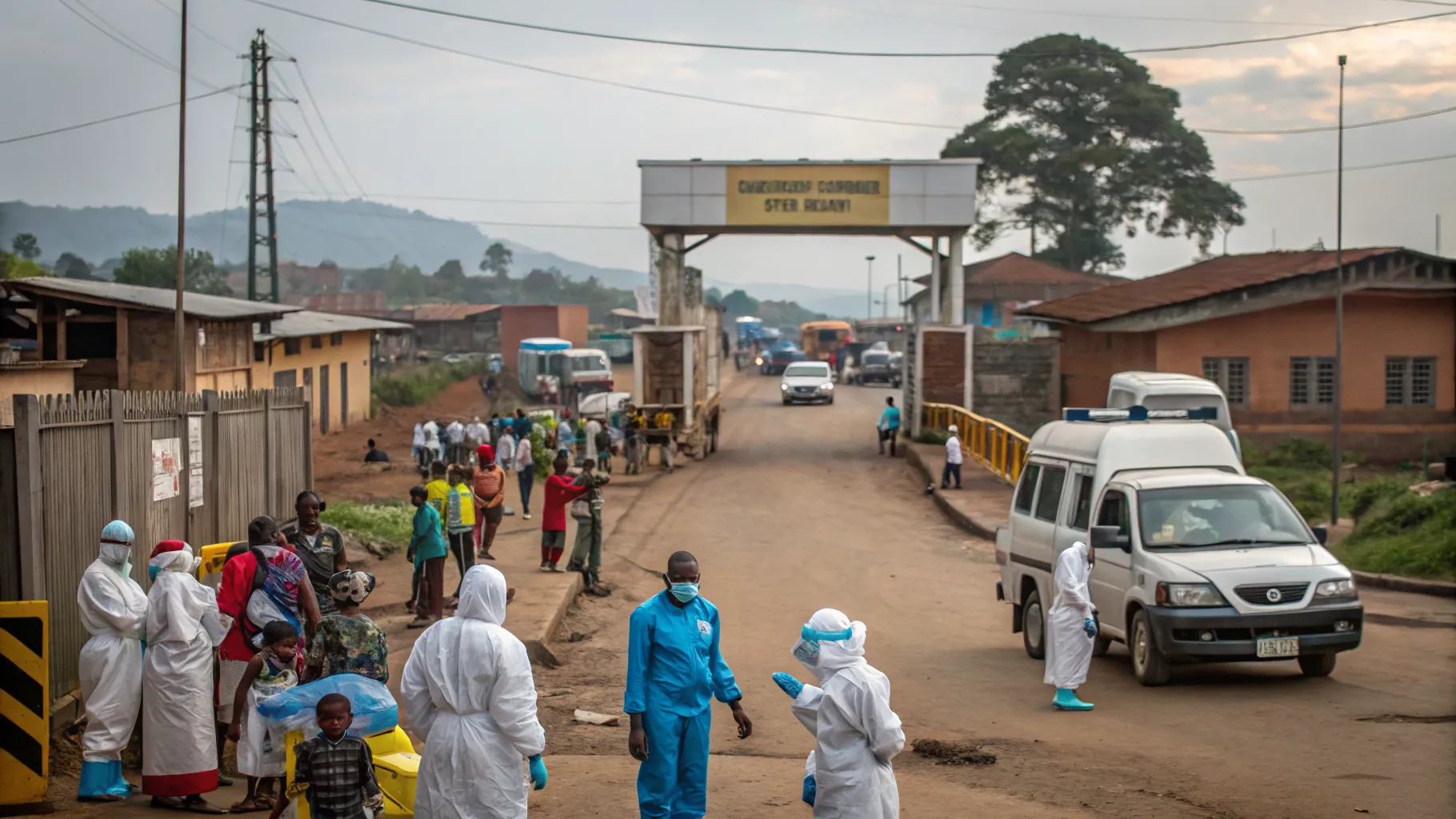
At least 80 people have died in Ituri province in the Democratic Republic of Congo, and health officials in Uganda say cases are spreading from travelers crossing the border. The reports have prompted new screening at key points of entry and urgent calls for regional coordination. The situation is unfolding along one of East Africa’s busiest corridors, where daily trade and family ties link communities on both sides.
What We Know So Far
“At least 80 deaths reported in Congo’s Ituri province while Uganda reports spread from travellers from the DRC.”
Authorities have reported a sharp rise in deaths in Ituri, a province that has faced repeated health and security crises. Uganda’s statement points to cross-border spread tied to recent travel. Officials have not confirmed the cause of the deaths. Local health teams say they are tracing contacts and monitoring travelers entering through western districts that share long, porous borders with the DRC.
Border towns such as Bunagana, Mpondwe, and Busia often serve as gateways for trade and transport. Heavy movement makes control measures harder. Health workers have set up temperature checks and screening forms at several crossings, according to local briefings. Community leaders are also being asked to report clusters of illness.
Regional Health Context
Eastern Congo has struggled with repeated outbreaks over the past decade, including Ebola between 2018 and 2020 that affected Ituri and North Kivu. In 2019, Uganda confirmed cases linked to family members who crossed from the DRC, prompting quick ring vaccination and isolation. The region has also faced measles surges and cholera tied to crowded settlements and limited sanitation.
These events shaped current playbooks. Cross-border coordination cells, daily situation reports, and joint investigations are now standard tools. The World Health Organization urges countries to share data swiftly and apply targeted screening rather than close borders, which can disrupt care and push travel to informal routes.
Cross-Border Risks and Response
Officials warn that movement for trade, family visits, and health care can spread illness if detection is delayed. Long stretches of unguarded border make comprehensive checks difficult. Roadside markets and bus parks act as mixing points for travelers from multiple districts and countries.
- Enhanced screening at formal border posts and high-traffic hubs.
- Rapid testing and isolation areas in district hospitals.
- Contact tracing teams with transport and communication support.
- Community alerts to report sudden illness or deaths.
Health workers emphasize clear public messages. People with fever, bleeding, vomiting, or severe diarrhea should seek care quickly and avoid public transport. Travelers are advised to carry identification and share recent travel details at checkpoints to help tracing if needed.
Complicating Factors on the Ground
Insecurity in parts of Ituri hampers response teams. Some villages are hard to reach due to poor roads and intermittent mobile coverage. These gaps delay sample transport and lab confirmation. Misinformation can also slow cooperation if families fear stigma or restrictions.
Cross-border trade is a lifeline for many. Any measure that slows it must be calibrated to reduce harm. Public health experts say focused screening and community engagement are more effective than blanket closures. Clear timelines and feedback to traders can keep cooperation high.
What Data Can Tell Us
During the 2018–2020 Ebola emergency, Uganda stopped onward spread through rapid alerts, point-of-entry screening, and training for frontline workers. District rapid response teams were activated within hours of suspected cases. Similar steps are now being reported. The key indicators to watch include the number of suspect cases detected at borders, the share linked to known clusters, and the delay from symptom onset to isolation.
If delays shrink and most contacts are found within 48 hours, spread can be limited. If unexplained cases appear far from borders or known links, wider transmission is more likely.
Perspectives From Health Officials
Health officers in border districts stress the need for supplies and staffing. They cite personal protective gear, transport fuel, and communication tools as immediate needs. Regional partners are being asked to share lab capacity and technical support for rapid diagnostics. Community leaders say consistent, simple messages in local languages help build trust and early reporting.
The reports of at least 80 deaths in Ituri and cross-border spread have put local systems on alert. The next days will be crucial. Clear case definitions, fast testing, and transparent updates can reduce fear and guide action. Residents are urged to follow health advice, report symptoms, and support tracing teams. Governments on both sides are likely to expand screening and share data daily. If response teams keep delays short and contact lists complete, the region can limit further spread while keeping vital trade moving.

Rashan is a seasoned technology journalist and visionary leader serving as the Editor-in-Chief of DevX.com, a leading online publication focused on software development, programming languages, and emerging technologies. With his deep expertise in the tech industry and her passion for empowering developers, Rashan has transformed DevX.com into a vibrant hub of knowledge and innovation. Reach out to Rashan at [email protected]