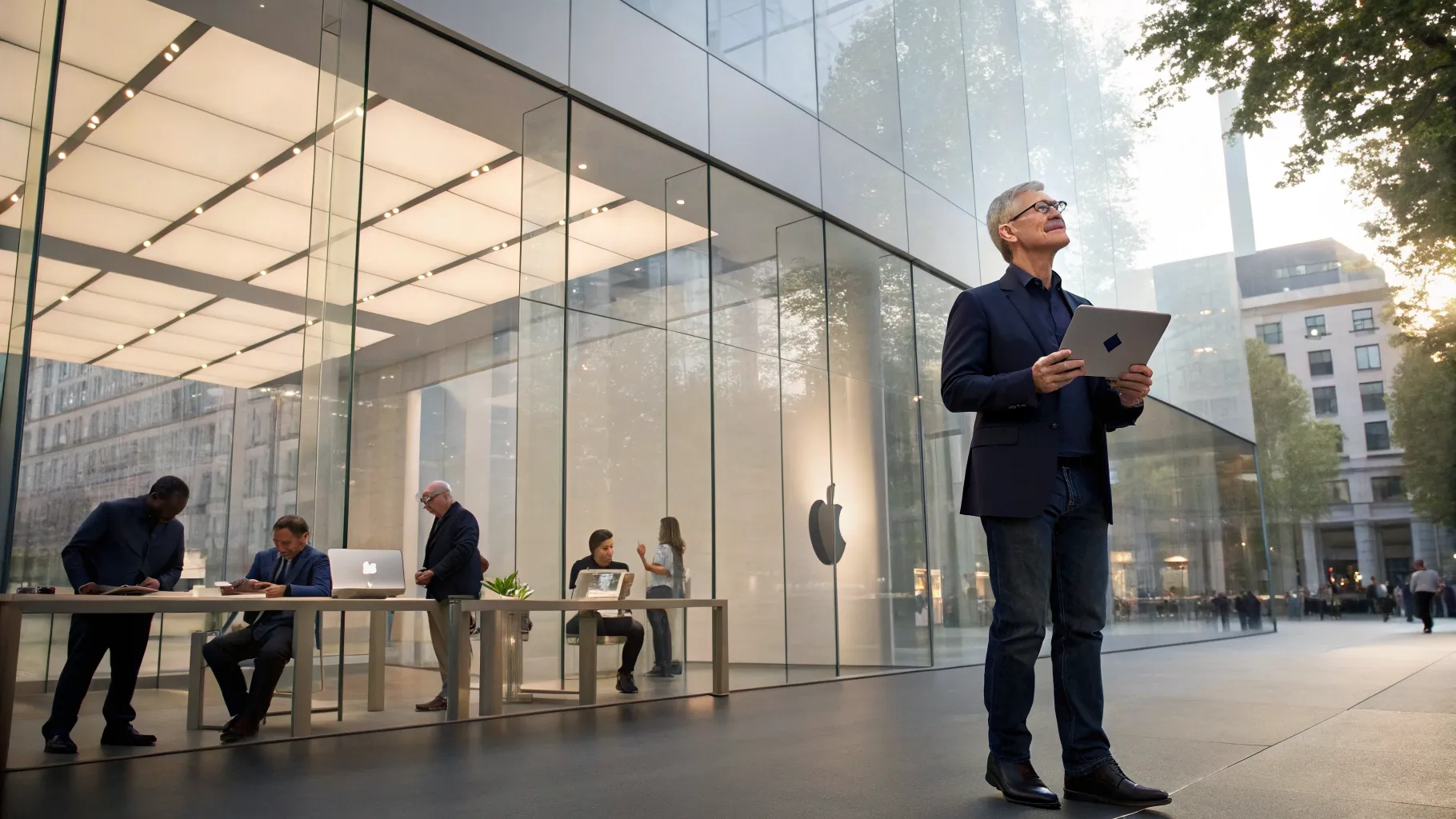
Apple’s market value has swelled to an estimated $4 trillion under Tim Cook, marking one of the most dramatic corporate expansions in tech history. Cook, who took over as chief executive in 2011, is credited with reshaping the company’s operations, products, and revenue mix while maintaining the iPhone’s dominance.
The move caps a long rise that began when Cook joined the company in 1998. Investors now look to how Apple balances growth, regulation, and new technology in the years ahead.
“Cook, who joined Apple in 1998, succeeded Steve Jobs as CEO in 2011 and went on to transform Apple into a $4 trillion powerhouse.”
From Operations Chief to Corporate Strategist
Cook built his reputation by tightening Apple’s supply chain and improving margins. That skill set helped the company scale during record iPhone cycles and global shocks. Under his watch, Apple expanded manufacturing partnerships and logistics, reducing delays and stabilizing product launches.
He also pivoted Apple toward services, turning the App Store, Apple Music, iCloud, and other offerings into recurring revenue. That stream reduced reliance on hardware cycles and smoothed quarterly results.
The Revenue Mix Shift
Services now contribute a larger share of sales than in the early iPhone era. Wearables, including Apple Watch and AirPods, added a second hardware leg. Together, these categories supported growth even as smartphone markets matured.
- Services provide recurring revenue and higher margins than hardware.
- Wearables created a new customer entry point and boosted device attachment.
- Mac and iPad lines were refreshed with custom chips to improve performance.
Analysts say the combination of ecosystem lock-in and steady subscription growth helped lift investor confidence. That confidence has supported large share repurchases and dividends.
Record Valuation and Investor Confidence
Apple’s ascent to an estimated $4 trillion reflects consistent cash flow and strong brand loyalty. Buybacks reduced share count and amplified earnings per share. The company’s balance sheet allowed continued investment in chips, services, and new device categories.
Investors have rewarded Apple’s approach to privacy and security, which became key marketing pillars. Tight integration of hardware, software, and services encouraged upgrades and kept users within the ecosystem.
Challenges: Regulation, China, and the AI Race
Despite the run-up, Apple faces scrutiny from regulators over app distribution rules and fees. Changes to platform policies could affect services margins. The company also manages exposure to China for both sales and production. Any disruption there can affect supply and demand.
Artificial intelligence has become a major competitive front. Rivals are moving quickly with AI assistants and on-device features. Apple is pushing on-device processing through custom silicon, but must show clear consumer benefits to stay ahead.
What Comes Next
Cook’s next phase likely focuses on three areas: AI across devices, health and wellness features, and deeper services bundles. More advanced chips can power private, on-device AI that protects user data. Health remains a core differentiator for wearables, especially with new sensors and software insights.
There is also room to grow in payments, media, and cloud services. Any new hardware category will need tight integration with Apple’s software and developer tools to gain traction.
Balancing Legacy and New Bets
Apple must maintain iPhone leadership while nurturing categories that can lift growth. Incremental upgrades alone may not satisfy investors if rivals leap ahead in AI or mixed reality. The company’s long product cycles and careful rollouts have historically managed that tension.
The test for Cook’s strategy is whether services and next-generation features can offset smartphone maturity. Execution on chip design, privacy, and developer economics will be central to that outcome.
Apple’s ascent under Tim Cook has been built on operational rigor, ecosystem strength, and relentless iteration. The company enters its next chapter with unmatched scale, but also higher expectations. Watch for product moves in AI, health, and services bundles as signals of where growth goes next. For now, the market’s verdict is clear: leadership stability and a sticky ecosystem can command a premium.

Rashan is a seasoned technology journalist and visionary leader serving as the Editor-in-Chief of DevX.com, a leading online publication focused on software development, programming languages, and emerging technologies. With his deep expertise in the tech industry and her passion for empowering developers, Rashan has transformed DevX.com into a vibrant hub of knowledge and innovation. Reach out to Rashan at [email protected]